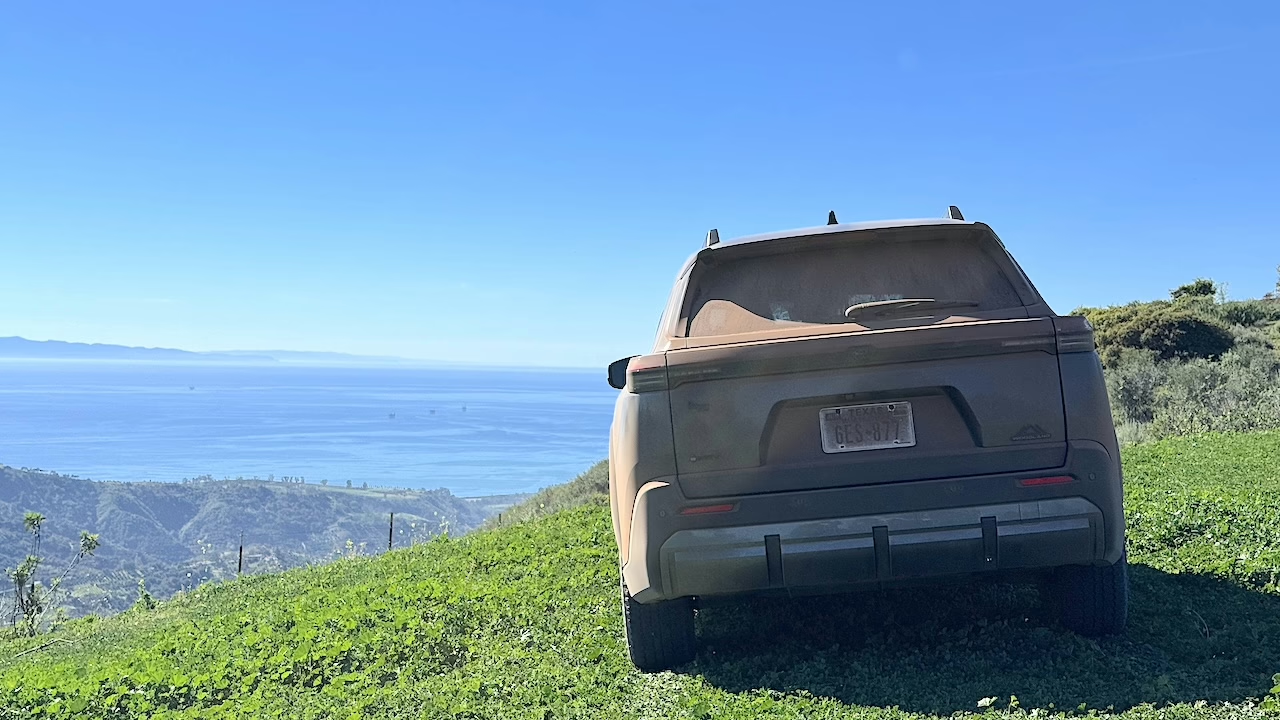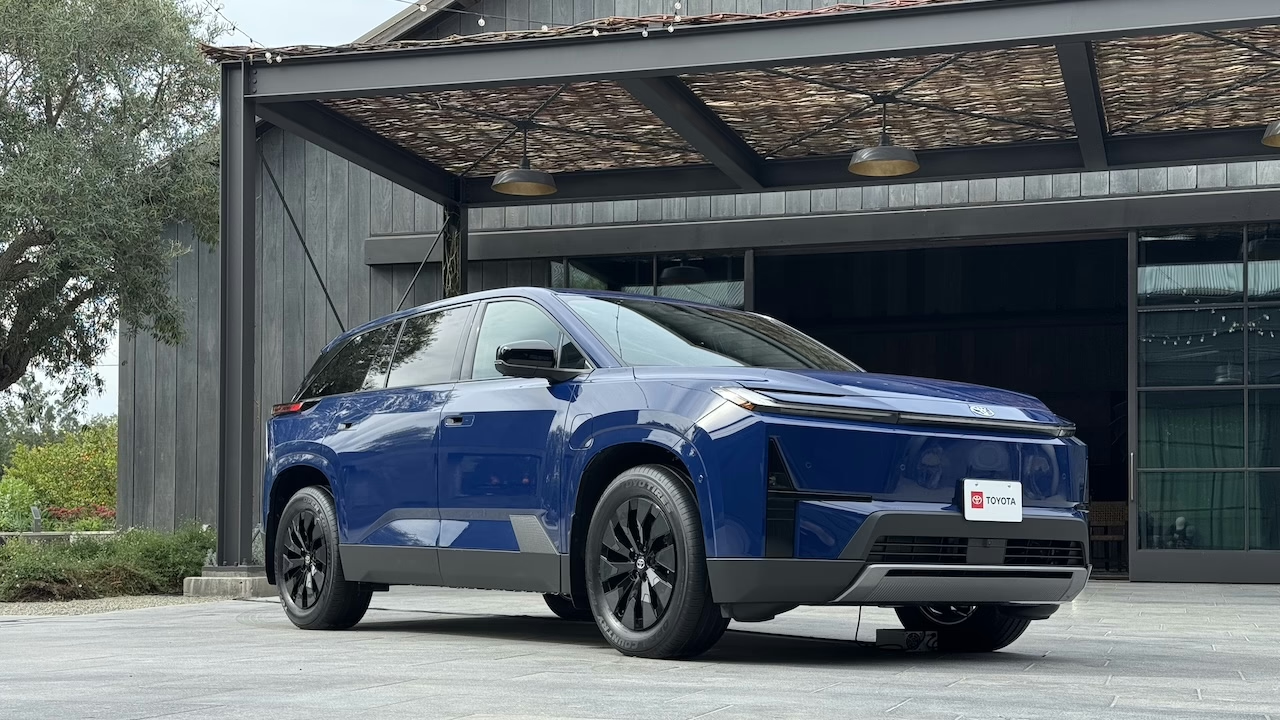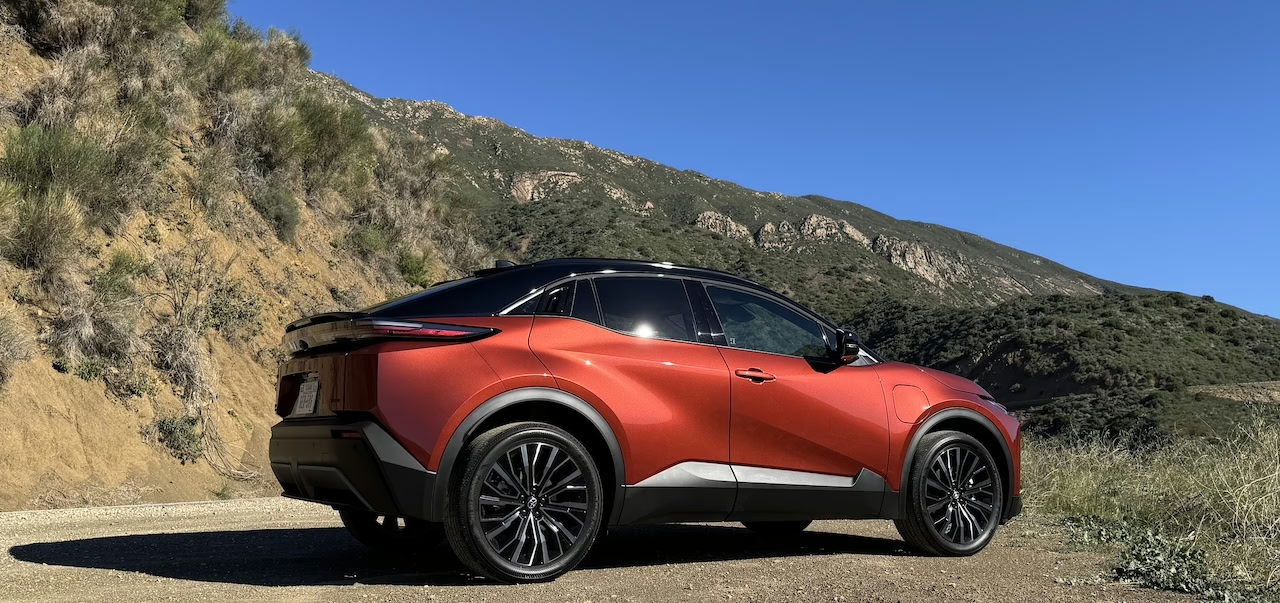
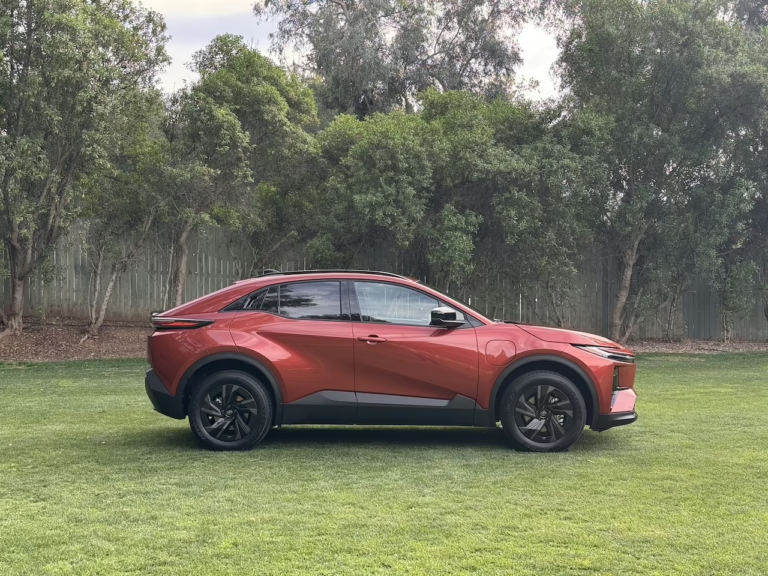
The new, 2026 Toyota C-HR harkens back several styling cues of the original subcompact crossover, but runs on the fully electric, bZ chassis underneath.
| What’s Good: 338 horsepower and right-now electric motor response to play with. Nicely executed styling. Holds its own handling. | What Could Improve: No steering feel. Somewhat distant digital instrument cluster. Severely pinched second row space. | My Conclusion: A stylish and not too expensive way to jump into the EV fold. Perfect for someone who only has one friend, but lots of stuff. |
OVERVIEW
Toyota essentially took the bZ Woodland playbook, but in reverse. The new for 2026 Toyota C-HR starts as a bZ, but measures 6.7-in shorter in overall length. It also rides on a 3.9-in shorter wheelbase and loses 1.2-in in height, too. Toyota added 0.4-in to the width, however. Otherwise, it essentially is a bZ, both in chassis and powertrain. One that looks a bit like the original C-HR, which we first saw as a 2018 model.
Unlike the bZ, the C-HR gets but one powertrain choice, two-electric motors, all-wheel-drive, and the larger battery pack. That makes its $38,450 starting price more impressive. My test car, in which I bombed around Southern California for a few hours, costs a bit more: $43,000. Still not bad.
Please do read all about it by clicking here to my Gear Junkie article. And to see what it’s like to drive, not to mention get a feel for how this thing handles, be sure to watch my video review above. And please read on for brief descriptions of the various components of the car, as well as competitors and specifications.
powertrain
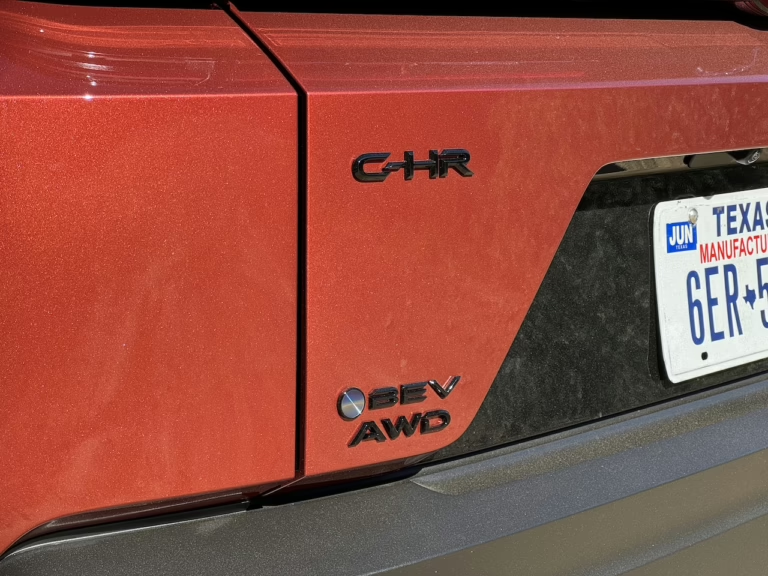
Toyota exactly matched the top powertrain offered in the bZ for this C-HR. Up front you get a large motor, outputting 224 horsepower and 198 lb.-ft of torque to the front wheels. In back, a smaller motor delivers 117 horsepower and 125 lb.-ft to the rear axle.
Limited by the capabilities of the 74.7 kWh, lithium-ion battery pack, you get 338 horsepower in total. That’s just under the sum of the two individual motors of 341 horsepower. Good news: it’s still a lot. And because electric motors deliver peak torque essentially right away, you do get the full 396 lb.-ft.
Being a front biased setup, you need to treat it like a front-wheel-drive vehicle to a certain extent, but Toyota claims 0-60 mph in 4.9 seconds. And my seat of the pants run certainly backs that up. It’s quick.
Driving Range and Charging
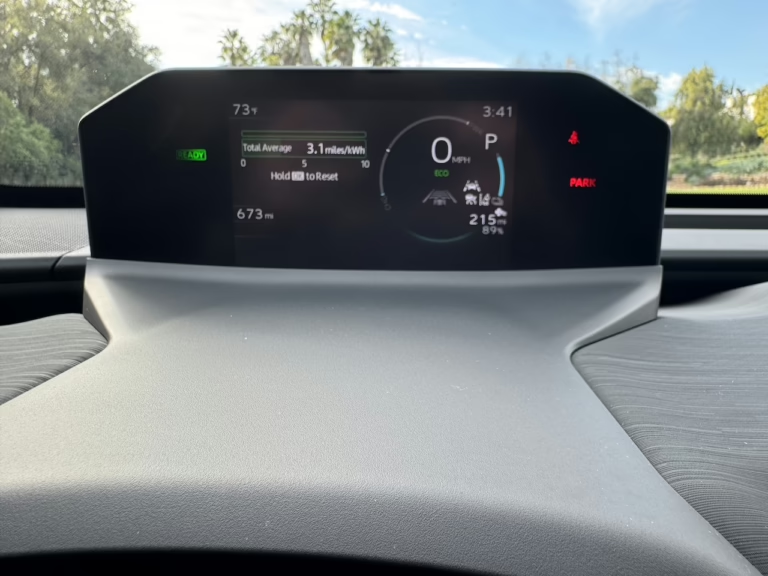
The C-HR comes in one of two trims offered: SE, and XSE. Going from 18-in to 20-in wheels changes the driving range between those two trims. You get 287 miles out of the SE and 273 from the XSE.
Toyota uses a 400-volt system, which limits fast charging capability a bit. The system will handle up to 150 kW of charging power, which results in needing half an hour to reach 80 percent state of charge, if you start at 10 percent. Not great. On the plus side, the C-HR uses a NACS port natively, so plug right into Tesla superchargers. At home, on a level two system, you’ll need seven hours to reach a full charge.
chassis
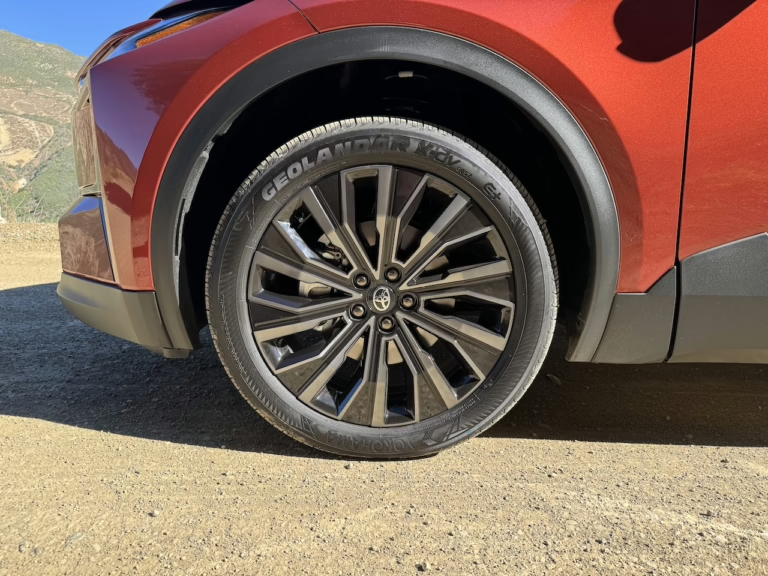
Toyota bolted up the most common suspension geometry under the C-HR. A strut suspension manages the road in front. A multilink setup handles the rear. It is a four-wheel-independent suspension. And, because of the heavy and very low mounted battery pack, Toyota tuned the suspension reasonably soft to handle all the bumps, yet with no worries of too much about body roll.
Inside
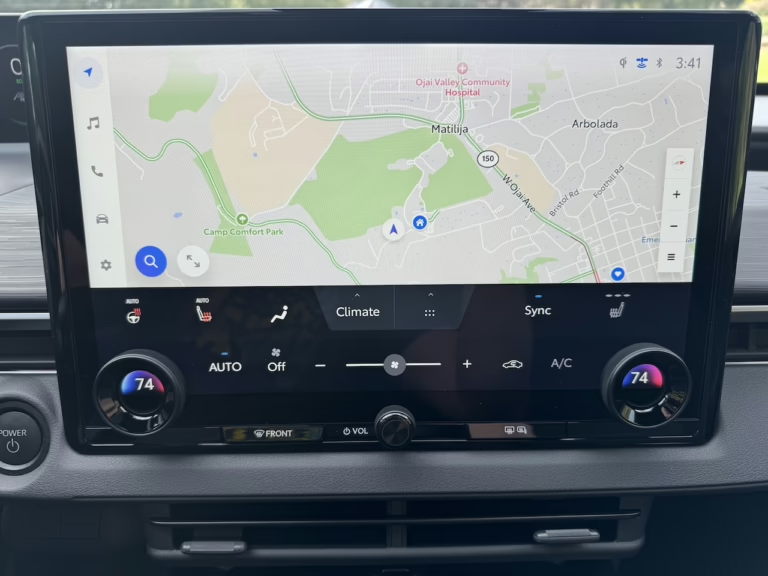
With only two trims offered, many of the C-HR’s available luxuries come standard. That includes a 7.0-in digital instrument cluster and a 14.0-in center display, which also comes with wireless smartphone connectivity (Apple CarPlay, Android Auto, etc.). You also get dual-zone climate control and, indeed, two wireless smartphone chargers, too.
For comfort in the cold, the front seats come heated as standard, and the driver gets a heated steering wheel. Everyone sits on SofTex synthetic upholstery, but the higher XSE trim does add suede inserts. XSE trims also get blind spot monitors and have access to further comfort options: heated rear seats, a panoramic glass roof, and a higher-end JBL sound system. But they are still optional extras.
If you get the glass roof, that impedes passenger space a bit. Not cargo space, however. You get 25 cubic feet behind the rear seat, 60 cubic feet with them folded. And access that space via the standard power liftgate.
Conclusion
The C-HR are just now starting to arrive at dealers. Again, please do check out my video and Gear Junkie article to get a feel for what it’s like to drive.
Competitors
Hyundai Ioniq 5
Nissan Leaf
Polestar 4
Specifications
2026 Toyota C-HR: 5-door, 5-seat, crossover SUV
Base price: $38,450 (excludes $1450 destination charge)
Price as Tested: $43,000
Powertrain: Two-electric motors
Elec. motor peak power: 224/117 horsepower (front/rear)
Engine peak torque: 198/125 lb.-ft (front/rear)
Total System Power: 338 horsepower
Total System Torque: 323 lb.-ft
Transmission: single-speed drive-down gears
Drive: all-wheel-drive
Driving range: 287 miles SE 273 miles XSE
Dimensions
Length: 177.9/4519 in/mm
Width: 73.6/1869 in/mm
Height: 63.8/1621 in/mm
Wheelbase: 108.3/2751 in/mm
Weights and Capacities
Curb weight: 4322-4366 lbs.
Interior volume: 92-94 cu ft
Cargo volume (seats up/down): 25/60 cu ft
Calculated weight to power (lbs./HP): 12.8:1-12.9:1
Mfr’s claimed 0-60 mph: 4.9 seconds
Mfr’s claimed Top Speed: NA mph
Government classified size: Small Sport Utility Vehicle 4WD
Options: Panoramic roof, $1000; JBL premium audio, $600; two-tone color, $500; cold weather package, $450