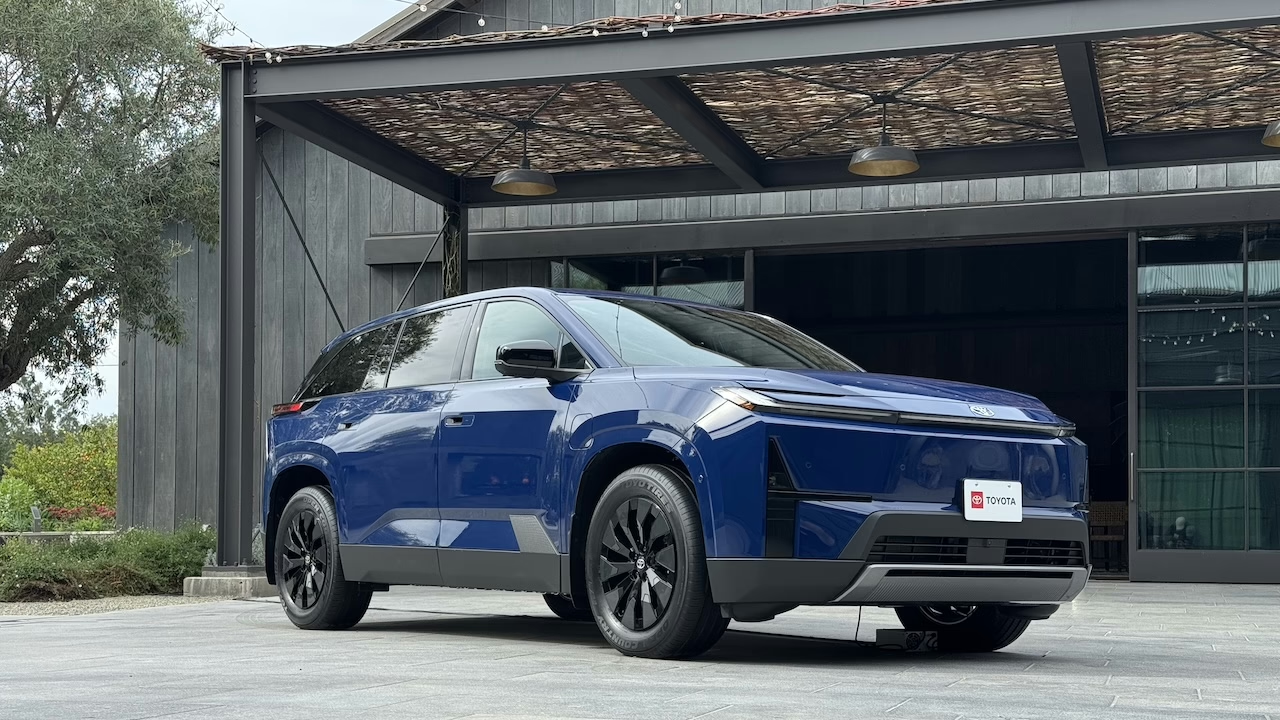
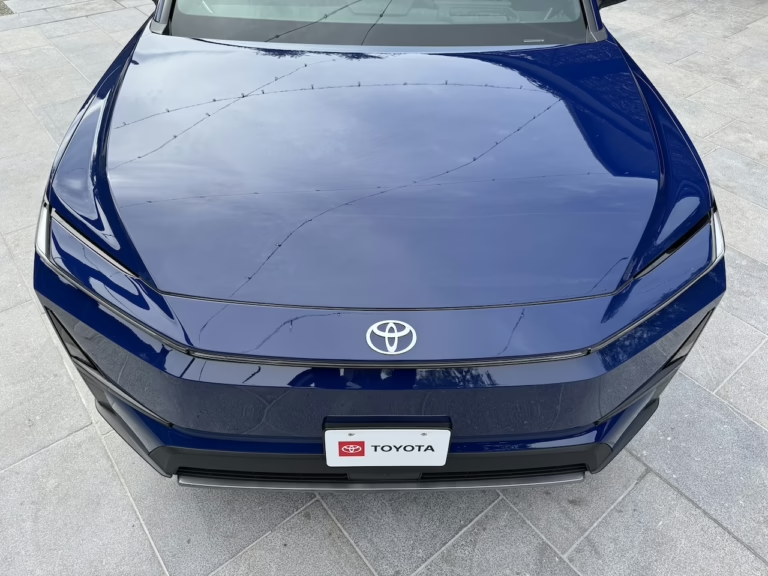
The fifth-generation, 2027 Toyota Highlander charts a new path as a battery electric vehicle that’s longer, lower, and wider than before. Seats up to seven.
Toyota recently lifted the curtains on the fifth-generation, 2027 Toyota Highlander. Taking a revolutionary path, the Highlander ditches internal combustion and offers a variety of fully electric powertrain options. This clears the way for the already more popular Toyota Grand Highlander to carry-on as the Japanese brand’s family crossover competitor as well as keep the Highlander name in the portfolio. I got the chance to take an early first look, shoot a video (below) and write about it for Gear Junkie.
VEHICLE
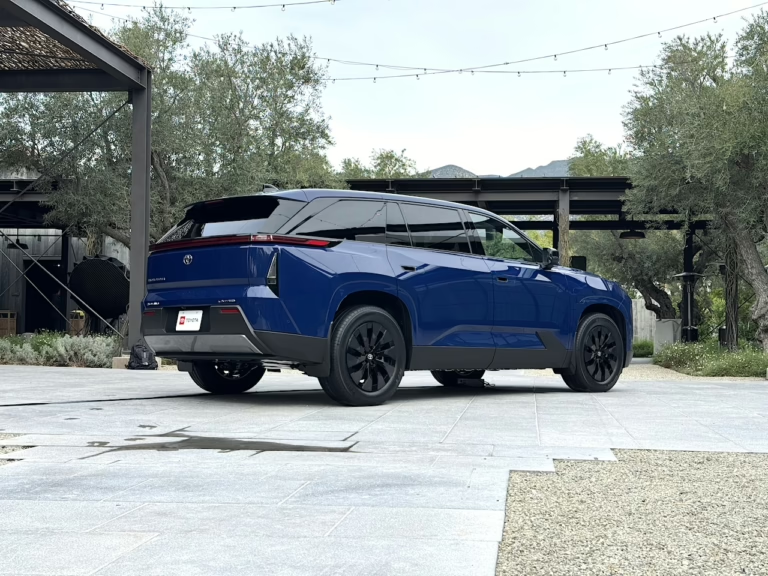
Standing about 0.8-inch lower to ground, 2.3 inches wider, and 3.9 inches longer, the Highlander looks broader, and sportier than before. No doubt contributing to the looks is its nearly eight extra inches of wheelbase, which forces the wheels right to the corners of the car. All of the above gives the 2027 Highlander the following dimensions: 198.8-in long, 78.3-in wide, 67.3-in tall, 120.1-in wheelbase.
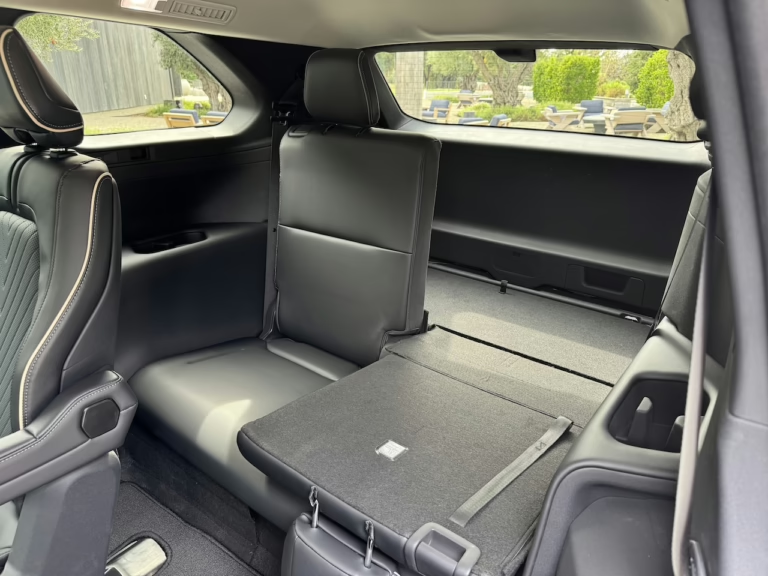
That space largely goes toward the cabin because cargo space stays about the same: 16 cu.-ft behind the third row, 46 cu.-ft with it folded. That also falls well behind the Grand Highlander.
And while much of the Toyota’s latest BEV mimics the bZ and C-HR, it rides on a different platform, a modified TNGA-K, as opposed to the e-TNGA. Also different, Toyota will build it in Kentucky and produce that batteries at a new facility in North Carolina.
LINE-UP AND FEATURES
We’ll see two trims leave final assembly in Kentucky: XLE and Limited. All of them will include full LED lighting, an acoustic front windshield, semi-flush and solenoid actuating door-handles, at least 19-in wheels, and an NACS style charge port.
Additionally, Toyota equipped the Highlander to allow the battery to power other external things. How much power you can draw is yet to be released. Oh, and on the road, it will come standard with Toyota Safety Sense 4.0.
In that vein, much of Highlander safety equipment will come standard. Limited trims do get additional driving aids, like land change assist. The top trim will also only come with the top-of-the-line powertrain.
POWERTRAIN
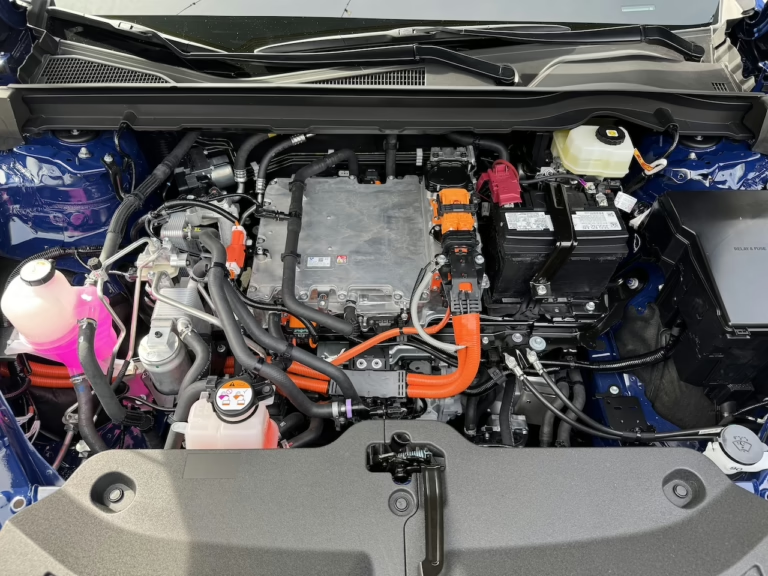
Toyota will sell front- and all-wheel-drive versions of the BEV Highlander. But only if you get the XLE trim. The base model makes do with a 77-kWh battery pack driving the front-axle-mounted motor that produces 221 horsepower and 198 lb.-ft of torque. That set up will take you 287 miles before depleting the battery.
Toyota will mount a second, smaller electric motor on the rear axle to increase total outputs to 338 horsepower and 323 lb.-ft of torque. But with the smaller battery pack, only plan to travel 270 miles or less between charging stations.
The third option retains all-wheel-drive, but swaps in a larger, 95.8 kWh battery pack. Doing so increases range to 320 miles, a more comfortable sounding number for a family with a to-do list. This powertrain is available on XLE and, again, your only choice for the Limited.
If you go with all-wheel-drive, Toyota includes multi-terrain-select and crawl control systems. Considering the inherit on-road vibe of this new Highlander, this seems a bit superfluous, but no harm in including it, I suppose.
I wish the Toyota’s three-row BEV got the same, stronger powertrain as the bZ Woodland, seeing as the Highlander is a larger vehicle, more likely to be loaded with kids at things. But I imagine this powertrain helps keep the Highlander price down.
TIME TO CHARGE
Despite the new battery plant, the Highlander still uses a 400-volt battery pack. And that limits charging power, which slows charging time. Plan on 30 minutes to go from 10 to 80 percent state of charge on a DC fast charger. To help a bit, the Highlander comes with the ability for the drive to engage a preconditioning system to ahead of plugging-in to allow it to more quickly accept full power and charge a bit faster.
And while Toyota didn’t explicitly say, I expect the Highlander to need about the same time as the other BEVs in the Toyota fleet: seven hours to fully charge on a level 2 system.
INTERIOR
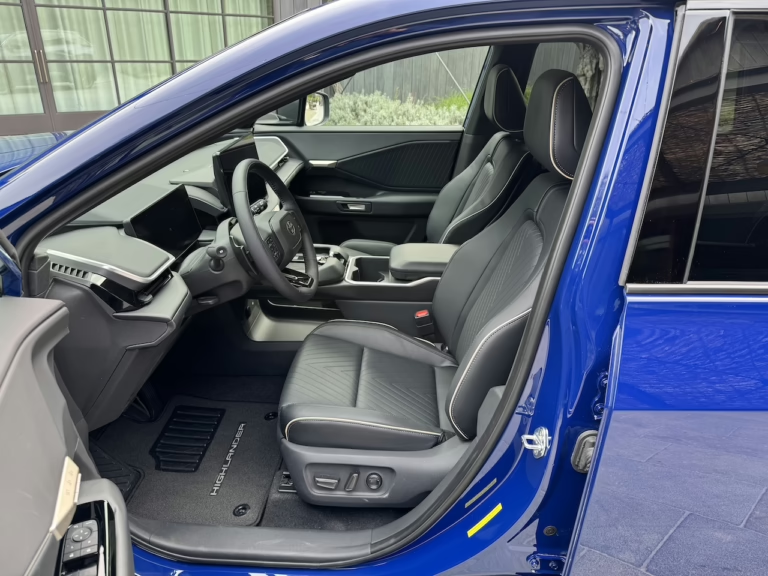
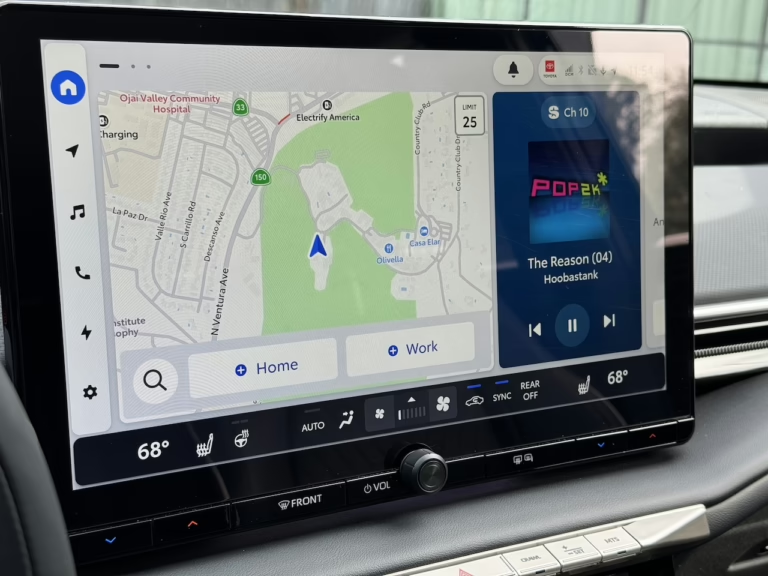
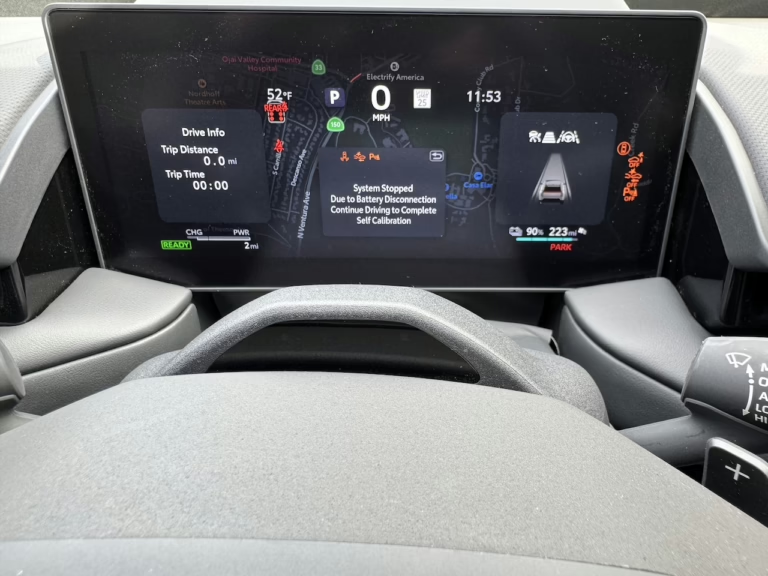
You will want a full charge, especially in the winter, to take advantage of the standard heated front seats and steering wheel. That pairs with a fully digital, 12.3-inch instrument cluster and a 14-in center display. The latter, of course, includes wireless Apple CarPlay and Android Auto. As well as two wireless smartphone charging pads, nestled in between the electric park brake and toggle switch PRNDL.
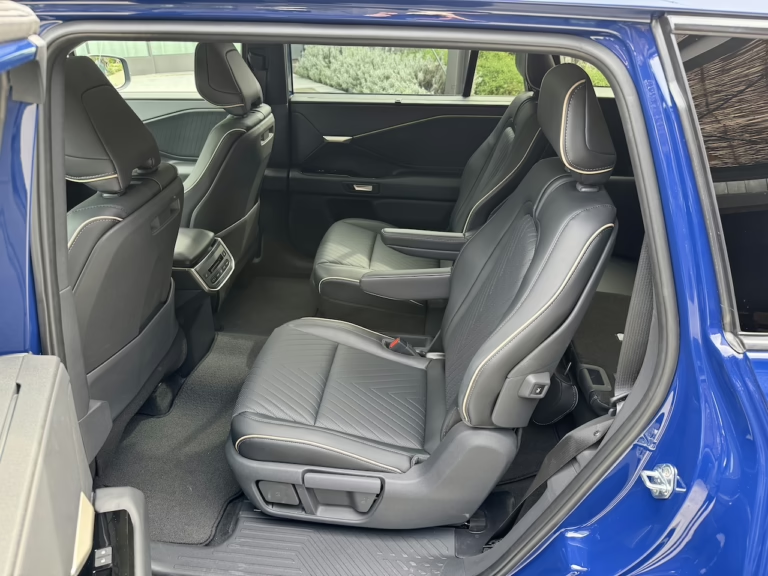
Standard equipment includes captain’s chairs for the second-row, which themselves include one-touch electric folding to access the third row. Both rows offer usb-c ports for device charging duties. They have those upfront, too. XLE trims can be optioned with a three-seat bench second row. Otherwise, the Highlander seats six.
Go with the Limited trim and Toyota adds ventilation to the heated front seats and heated seats for the second row. The second row also benefits from manual sunshades to keep the glare out. Up front, the driver views information from an added head-up display and can keep an eye on things via a surround view monitor.
GOOD IDEA?
Living on but one EV in its line-up for a while, the bZ (formerly the bZ4X), Toyota quickly added two more, the bZ Woodland and the C-HR. And then revealed this fourth BEV Highlander. Yet all four enter the market with fairly average technology and range. And it comes as the U.S. BEV market softened a bit. After all, we lost incentives that dropped the price.
Yet that softening may prove short lived. As I am starting to see the mainstreaming effect of battery-electric. Slowly, but surely, people are getting used to the idea of a battery instead of a gas tank. And some of those people invariably have families, why not offer three rows.
Perhaps Toyota timed this right by waiting a little longer than GM, Hyundai, and Kia. But price will be critical. For example, the base Hyundai Ioniq 9 starts at nearly $61K! I hope that Toyota undercuts that by at least $10K, but we won’t know until soon before they arrive at dealers late this year.
I wish Toyota packed an 800-volt system in the Highlander. And found a way to eke out more range. But, based on my drives of the bZ Woodland and C-HR, I’m encouraged that it will drive well. As soon as I learn more, I will certainly share. And will happily report on how well it drives as soon as I get the chance.