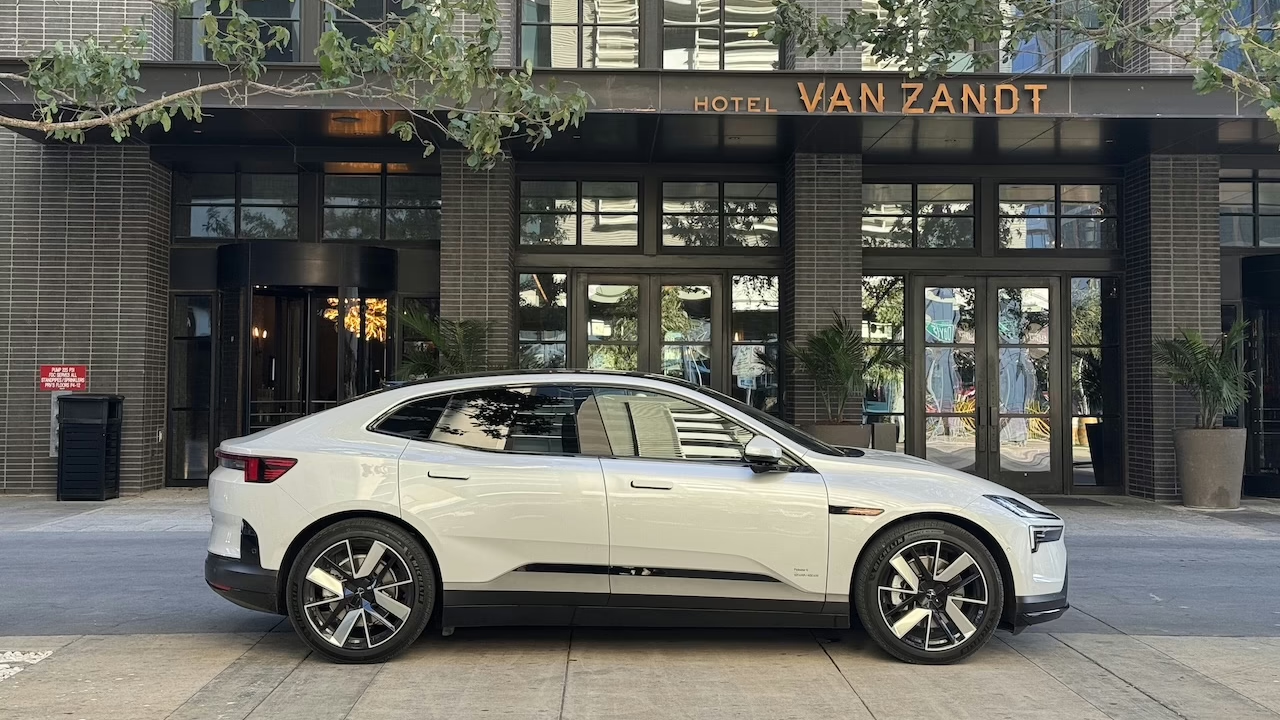
The 2026 Polestar 4 delivers a novel approach to improve second row comfort, a sleek design, and plenty of electric pep to deliver a engaging driving experience
| What’s Good: 536 horsepower split among all four wheels, quick witted handling, nine HD cameras to provide an expansive view. | What Could Improve: Too expensive for many of us. Small frunk in a sea of black plastic. Wished for a bit more one-pedal driving decel. | My Conclusion: As long as you can afford it, the 4 looks the business, punches above its weight in power, and offers a few neat tricks to show your friends. |
OVERVIEW
Polestar delivered the 4th vehicle to its stable for us Americans to buy, aptly named the Polestar 4. But don’t let that number-name fool you. This one enters the market underneath the Polestar 3 in both size and price, starting at $57,800 for the base, single-motor long-range Polestar 4.
For expediency’s sake, I’ll have Ola Aldensjö, Team Lead and Product Manager of Polestar explain.
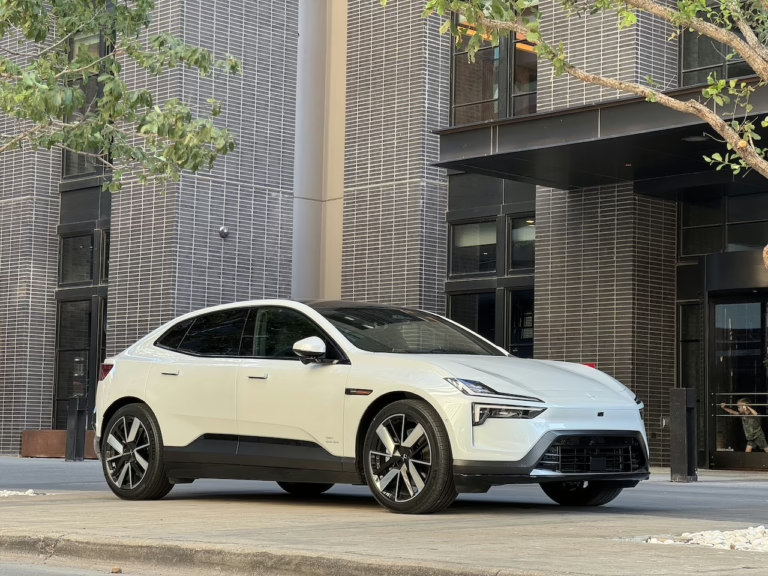
“Polestar 4 is (a) D segment, SUV coupe. It’s positioned in between Polestar 2 and 3. It’s longer than Polestar 2, shorter than Polestar 3. It’s higher than Polestar 2, lower than Polestar 3. It’s, pricewise, more than Polestar 2, less than Polestar 3. So, also (the) 4 could be a Polestar 2.5, but that’s not how we name our cars.”
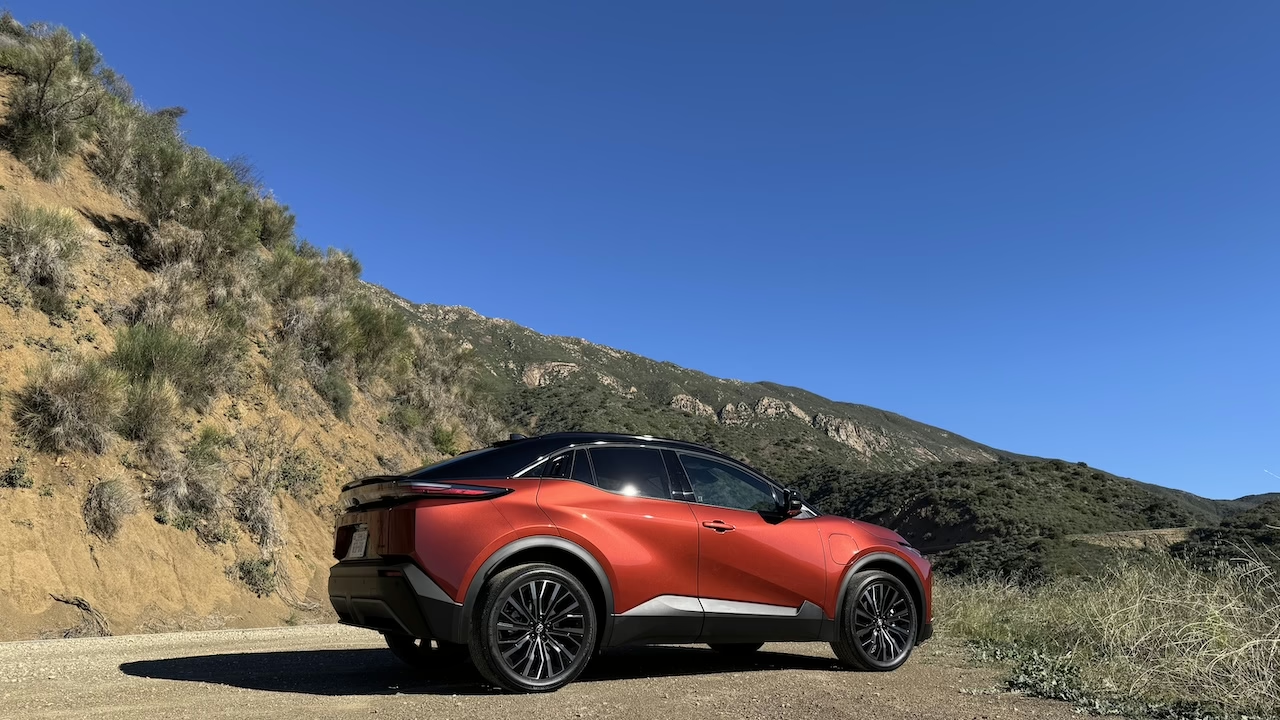
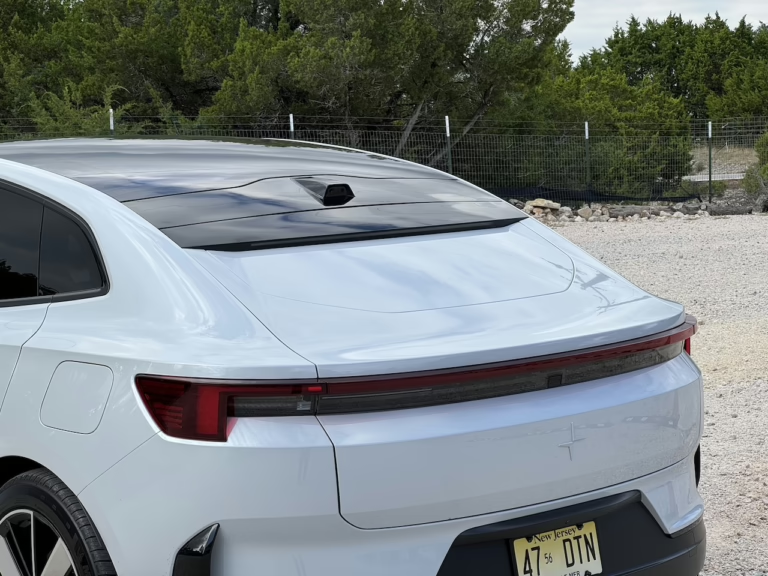
Regardless, it looks cool, includes a surround-view camera system as standard equipment, but no rear windshield. And shows how the brand continues to separate itself from former owner Volvo.
If you want a deep dive into all of that, check out my article on Gear Junkie.
powertrain
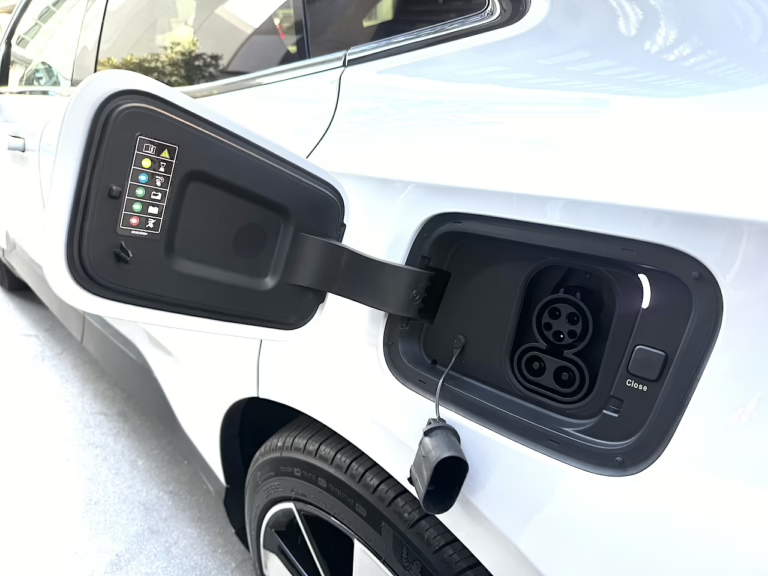
Polestar offers two powertrains for the 4, a single-motor and a dual-motor. Both include the name long-range as both include the 100-kWh battery pack for energy to feed the electric motors. It’s a 400-volt, lithium-ion pack that will accept as much as 200 kW of charging power, which will take you from 10-80 percent state of charge in 30 minutes. Polestar includes 11kW A/C charger with the 4, by the way, 11 hours on that will fully charge a depleted battery.
A full charge provides the single-motor 4 up to 310 miles of range, according to the EPA. And that means 310 miles worth of 268 horsepower and 253 lb.-ft of torque sent to the rear wheels to play with. Not an overwhelming number, given the car’s nearly two-and-a-half-ton curb weight. But plenty to move around town.
Of course, if you dump an additional $6500 on the table, Polestar will happily point you toward the dual-motor 4, which mounts a second electric motor of the same size and outputs on the front axle. With it, you get 536 horsepower and 506 lb.-ft of torque to play with. But only for 280 miles between charges, according to the EPA.
The dual-motor ups curb weight to nearly 5200 pounds, but with exactly double the power, the 4 becomes a land rocket play thing. Bury the accelerator and two electric motors immediately shove you back into the seat as the 4 squats and shoots off. 60 mph goes by in 3.7 seconds.
Moreover, the immediacy of power delivery, regardless of speed or circumstances, makes two-lane passing maneuvers and dancing around left-lane hogs on the interstate an absolute delight.
I only wish Polestar tuned in a more authoritative one-pedal driving mode. In its highest setting you get 0.3 g of decel. It’s OK. But this EV only company should lead in this area of driving, no?
chassis
If you go single motor, Polestar installs a coil-spring suspension with standard shock absorbers. But dual motor versions also benefit from adjustable shock absorbers, giving you the option to keep the ride cushy or firm things up dramatically for a bit back road shenanigans.
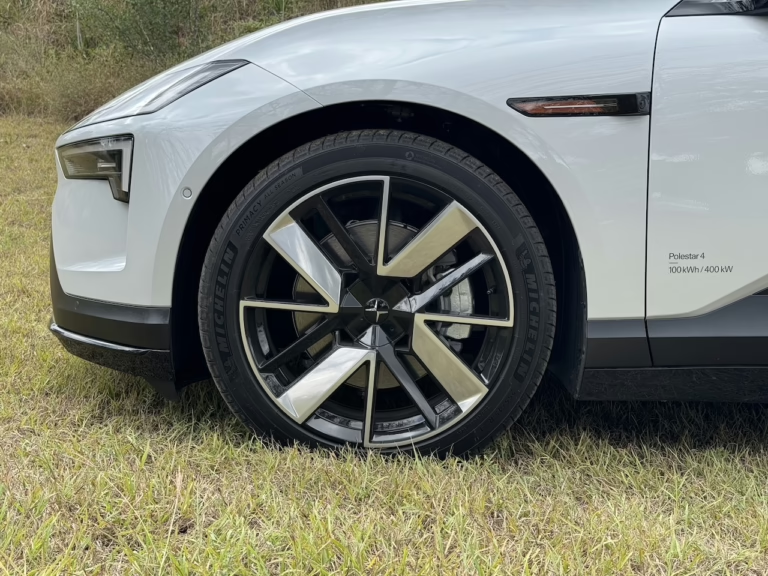
My dual motor test car also benefitted from an $1800, 21-inch wheel option, which replaced the standard 20-inch wheels. The thinner sidewalls of the Michelin Primacy tires sped up front-end response a touch.
In the stiffest setting, I found the 4 quick-witted and sure-footed. If you really want to hustle around a set of bends, you get sport sedan like behavior. At barely over 60-inches tall, you essentially get sport sedan dimensions to work with too. The fact that most of the 4’s weight lies beneath the floor, giving it a very lower center of gravity, helps.
You can go a step further and get the Performance Pack for the 4. It adds $4500 to the total, but you get forged 22-inch wheels with summer performance tires, Brembo brake calipers painted in Swedish gold, different brake rotors, a different suspension tune, as well as Swedish gold valve stem caps and seatbelts.
But back to my test car. With the shocks absorbers tuned for cruising, the 4 absorbs life’s unevenness with aplomb. And Polestar isolated the cabin well to keep out both wind and road noise. Enjoy a serene cabin when it’s time to relax. Chassis-wise, high marks all way round.
Inside
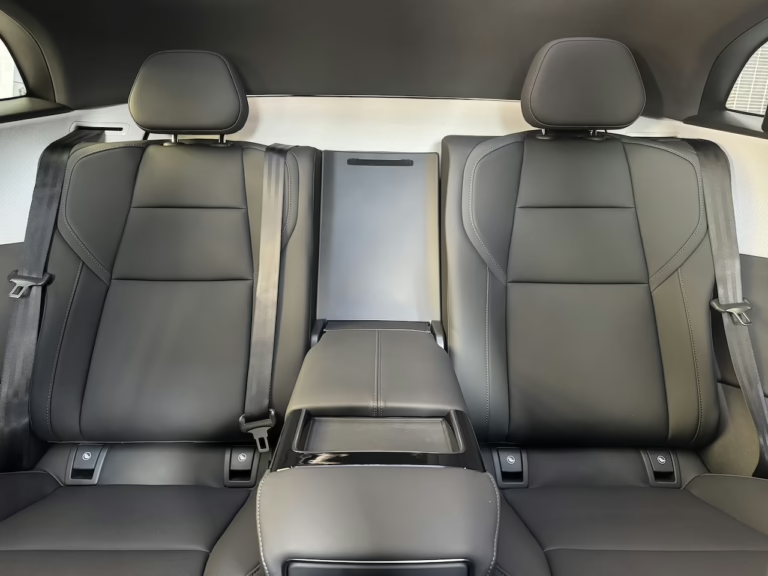
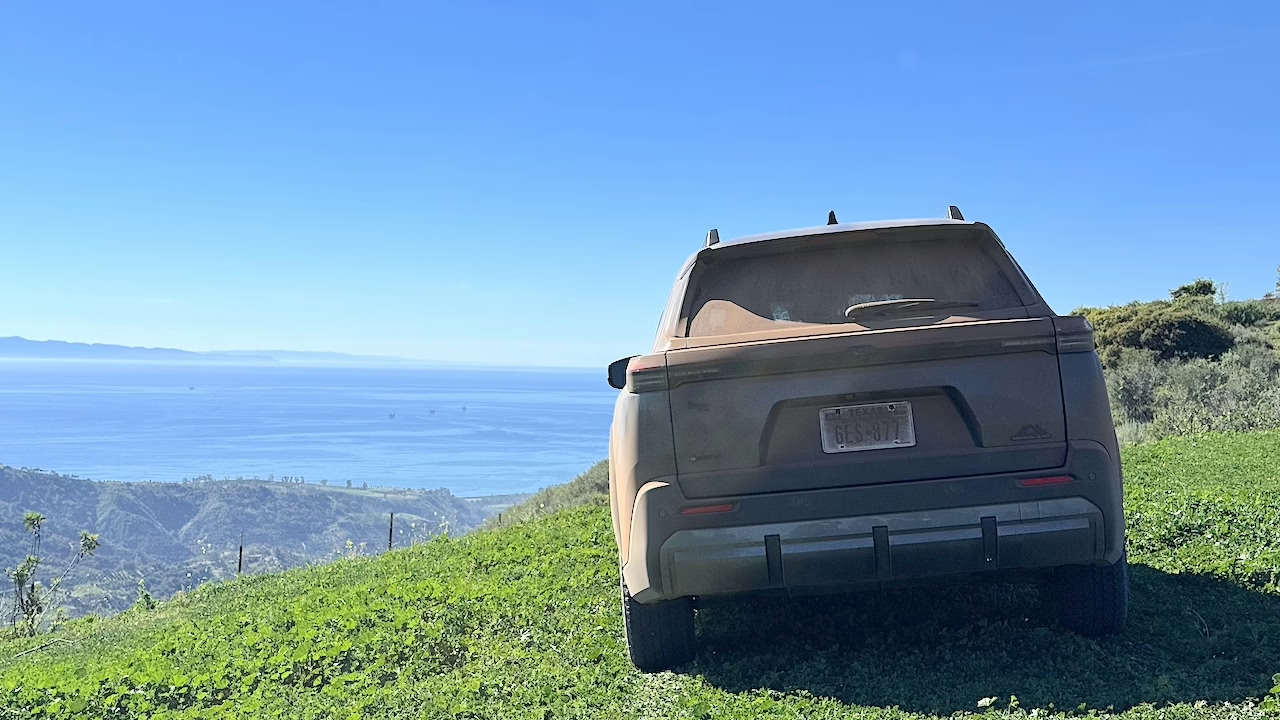
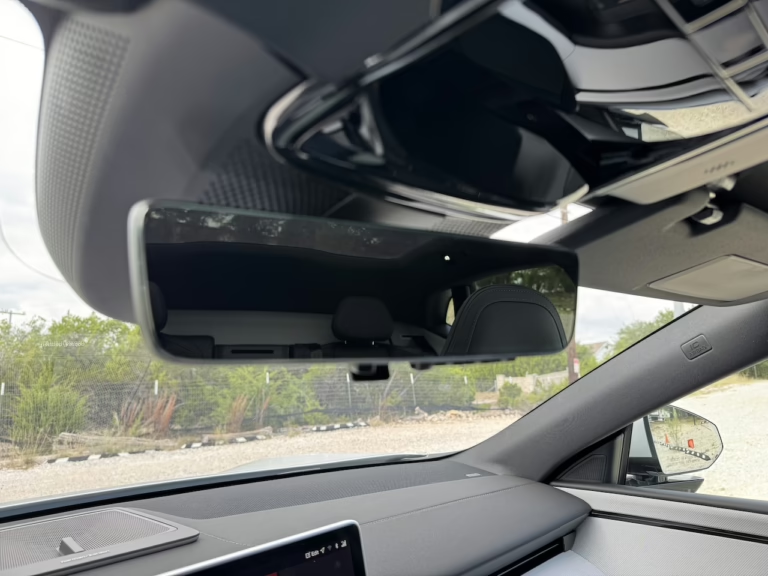
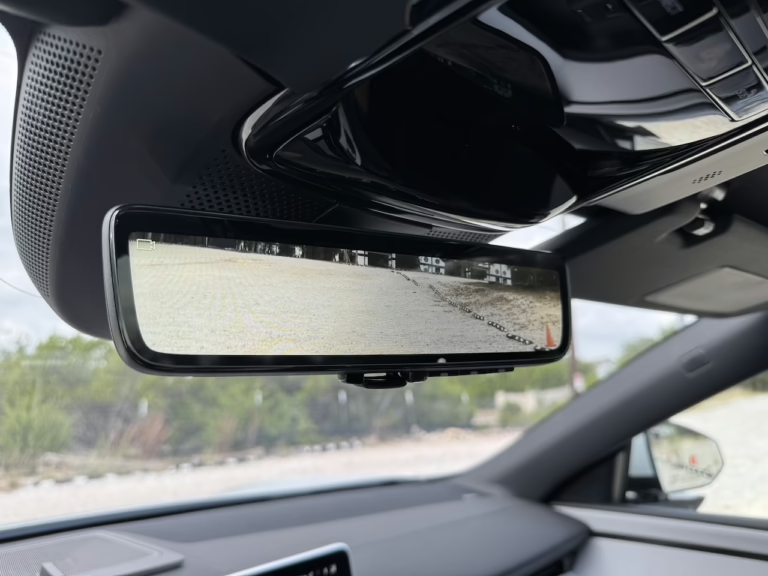
To allow engineers to optimize second row space and comfort, Polestar found one particular part in the way, the rear windshield. So, they ditched it. In its place, a rear-view mirror that doubles as a screen for a camera. It’s adequate, but far from a replacement of seeing things for yourself.
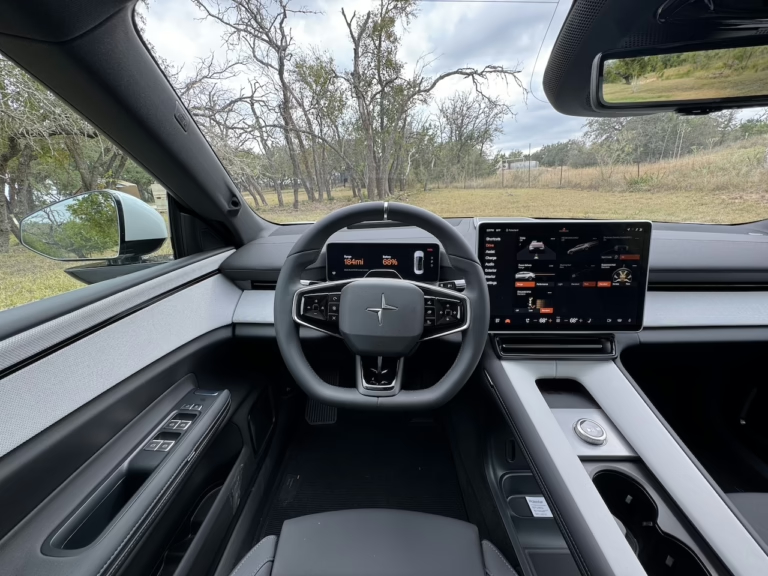
Until, that is, you actually put the car in reverse and the 15.4-inch center display lights up with an expansive view of what’s behind you in high-definition detail. In total, Polestar mounted nine cameras around the 4, most of them aimed toward the rear. It’s brilliant.
By the way, yes, the second-row feels comfortable. Especially since my test car included the $5500 plus pack, which added a third climate control zone, heated rear seats, and a 5.7-inch screen for the second row, among other luxuries.
The larger screen up front runs on Android Automotive OS, which includes Google built-in as well as Android Auto and Apple CarPlay connectivity. The system works well, operates lag free, and keeps you connected and entertained with zero stress. Courtesy of 12-way adjustable seats, the 4 keeps your backside comfortable too.
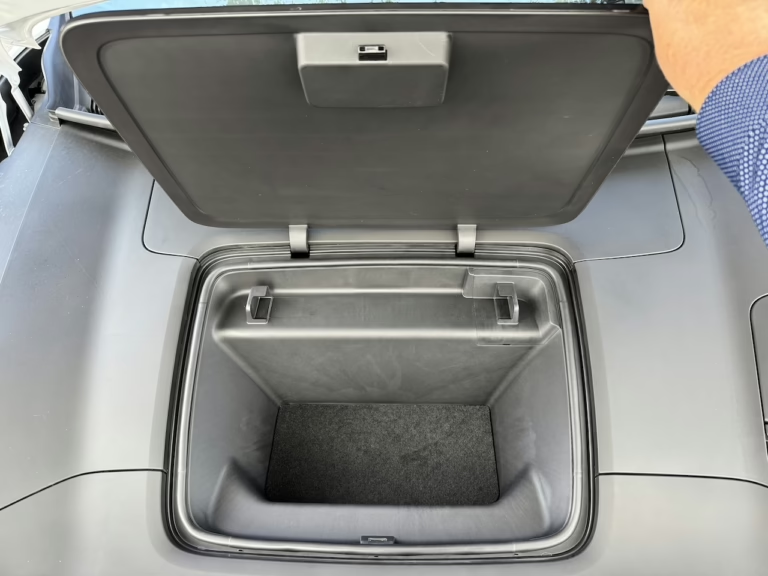
Go all the way to the front and, yes, you get a frunk. An entire 0.5 a cubic foot of space surrounded by a sea of black plastic. Or—not much. But it’s more than nothing. I’ll take it.
Conclusion
Polestar broke from Volvo recently but still finds itself intertwined. To start, Volvo continues as a strategic partner, which seems logical as it also quickly transforms itself to an EV brand. Look no further than the recently revealed Volvo EX60.
Furthermore, in the U.S. at least, every Polestar dealer also sells Volvos. Finally, Geely—a major Chinese brand—owns a significant stake in both companies.
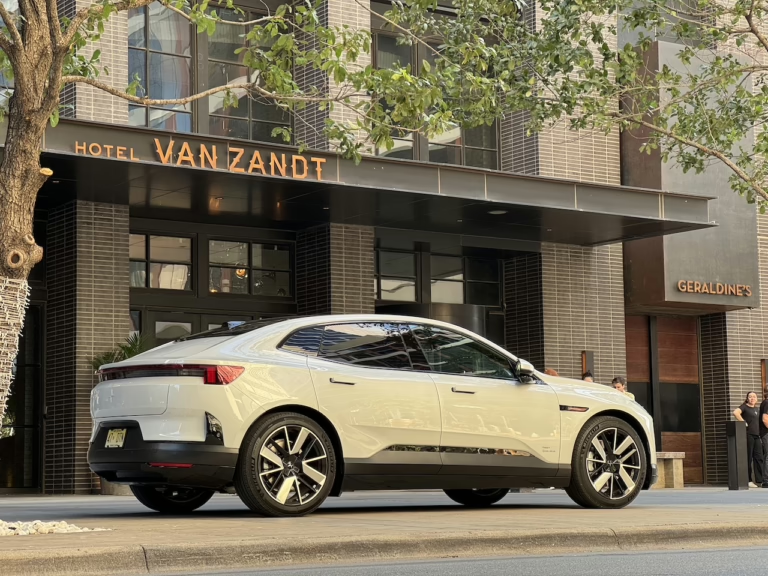
Given that, Polestar impressed me with its diverging styling signature and novel approach to building a car. In the modern era, who needs a rear windshield? I mean, why not ask those questions.
Most important, the Polestar 4 delivers fun from behind the wheel. Its quick, quick responding, and predictably behaving. For the lucky minority of folks that can afford one. It’s definitely worth checking out.
Competitors
Cadillac Optiq
Genesis Electrified GV70
Lexus RZ
Specifications
2026 Polestar 4 Long Range Dual Motor: 5-door, 5-seat, “crossover SUV coupe”
Base price: $64,300 (includes $1400 destination charge)
Price as Tested: $72,900
Powertrain: Two electric motors, one on each axle
Total system Power: 536 horsepower
Total system Torque: 506 lb.-ft
Transmission: single-speed drive down gears
Drive: all-wheel-drive
Fuel Economy in MPGe and range
90 city
80 highway
85 combined
Driving range: 280 miles
Dimensions
Length: 190.5/4839 in/mm
Height: 60.4/1534 in/mm
Width 81.4/2068 in/mm
Wheelbase: 118.0/2997 in/mm
Weights and Capacities
Curb weight: 5192 lbs.
Interior volume: NA cu ft
Cargo volume (behind 2nd/1st rows): 19/54 cubic feet
Calculated weight to power (lbs./HP): 9.7:1
Mfr’s claimed 0-60 mph: 3.7 seconds
Mfr’s claimed Top Speed: 124 mph
Government classified size: standard sport utility vehicle 4WD
Options: Plus Pack, $5500; 21-in wheels, $1800; Premium paint (snow), $1300