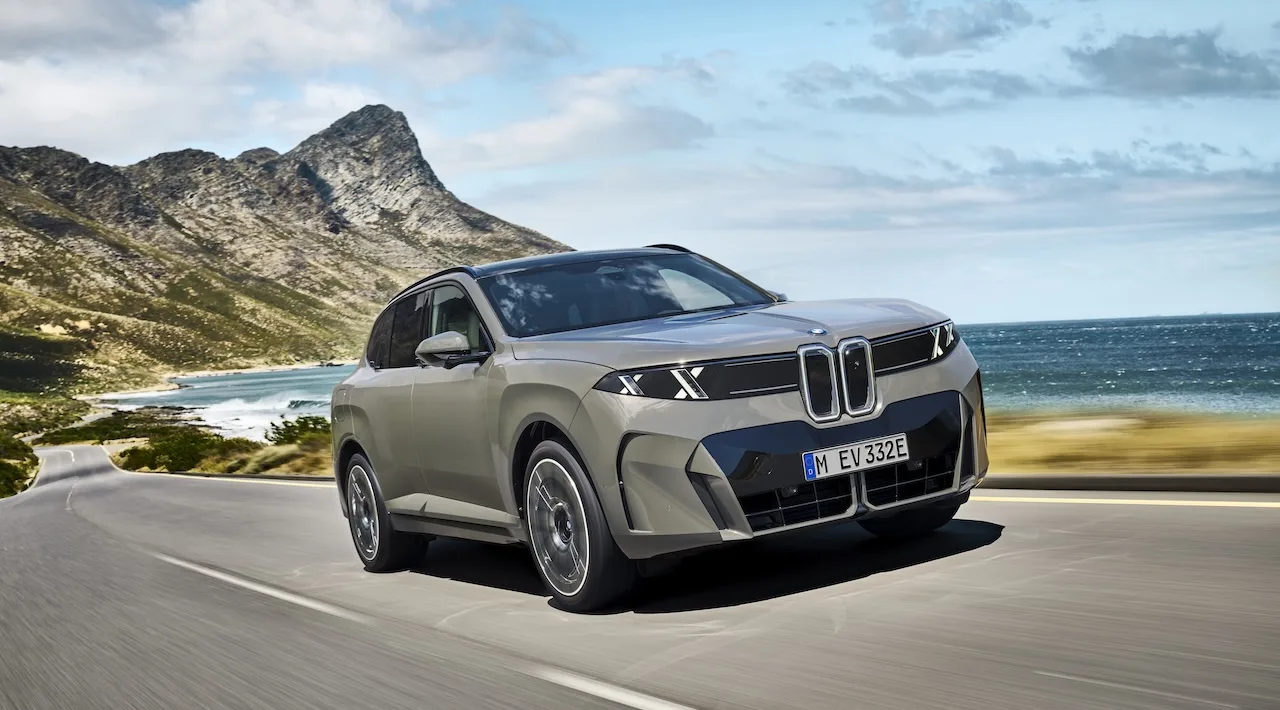
The 2027 BMW X5 includes three different powertrains at launch: a mild hybrid, a plug-in hybrid, and an EV. A new look and tons of new tech join the party.
To enter its fifth-generation, the 2027 BMW X5 offers a longer wheelbase, a new look, and three different powertrain choices. Heavily guided by Neue Klasse, we see a similar path to the recently revealed BMW iX3. And while my eye can’t quite decide on the styling just yet. Certainly, some other aspects of the family sized crossover look promising.
NEW LOOK
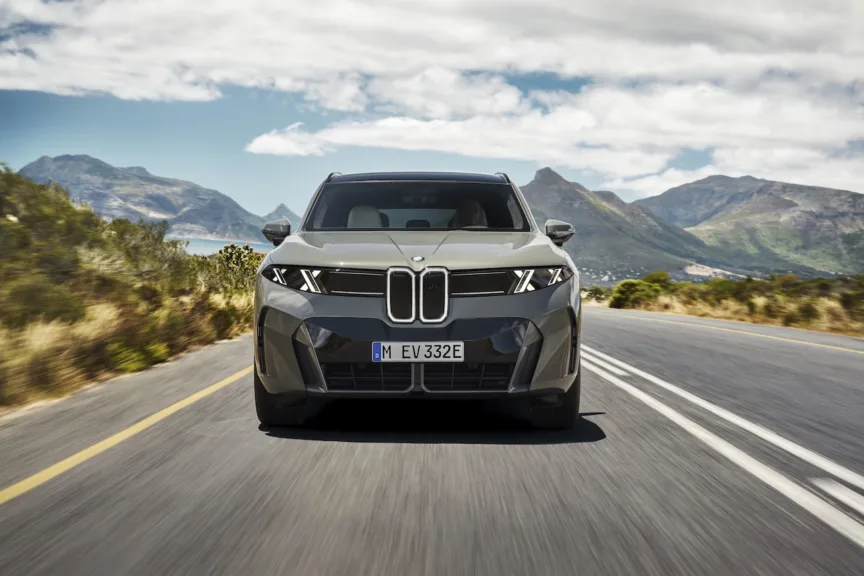
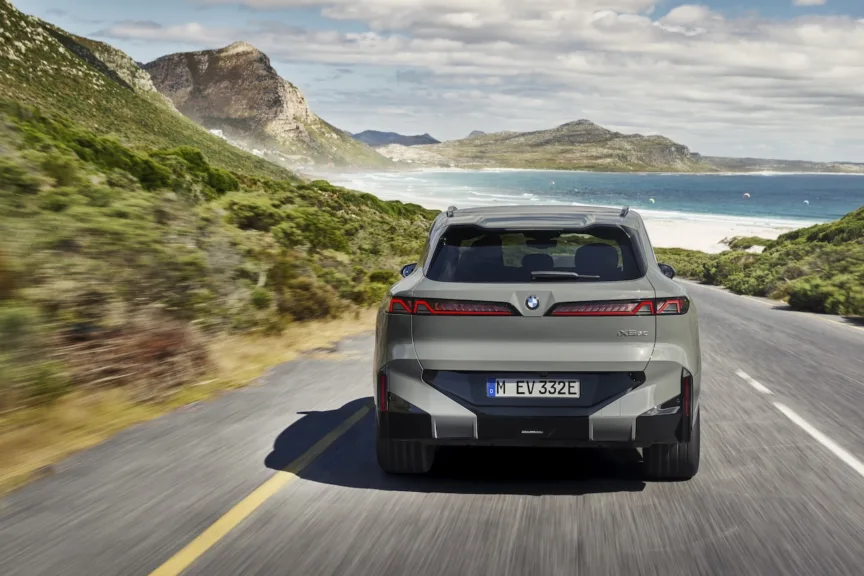
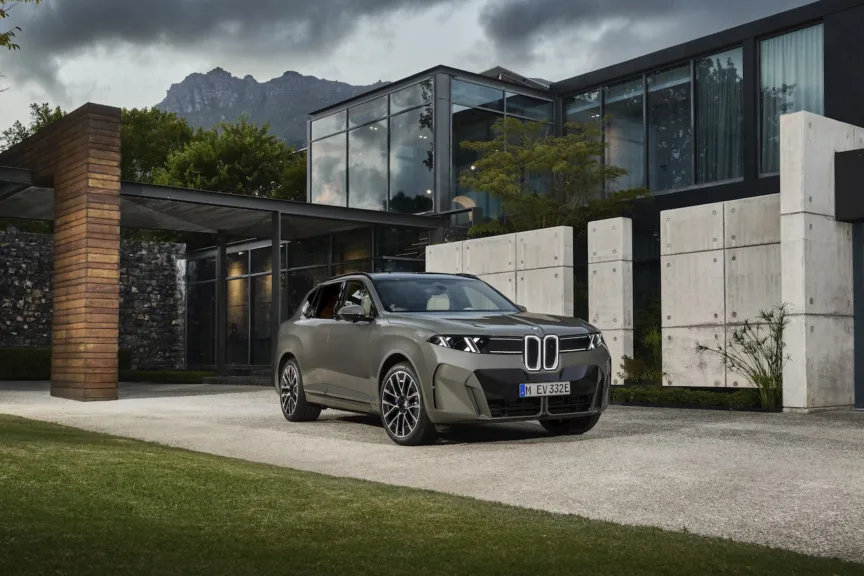
Taking lots of influence from the iX3, the X5 rocks the same vertically stacked faux kidney grill with light around the perimeter that BMW calls “Kidney Iconic Glow.” From there you see a lot of gloss black, sharp cut lines on either side of the bumper and a bit of actual grille at the bottom. I’m still getting used to the new look. Right now, I find it a tad gaudy. But I feel I’ll warm to it over time.
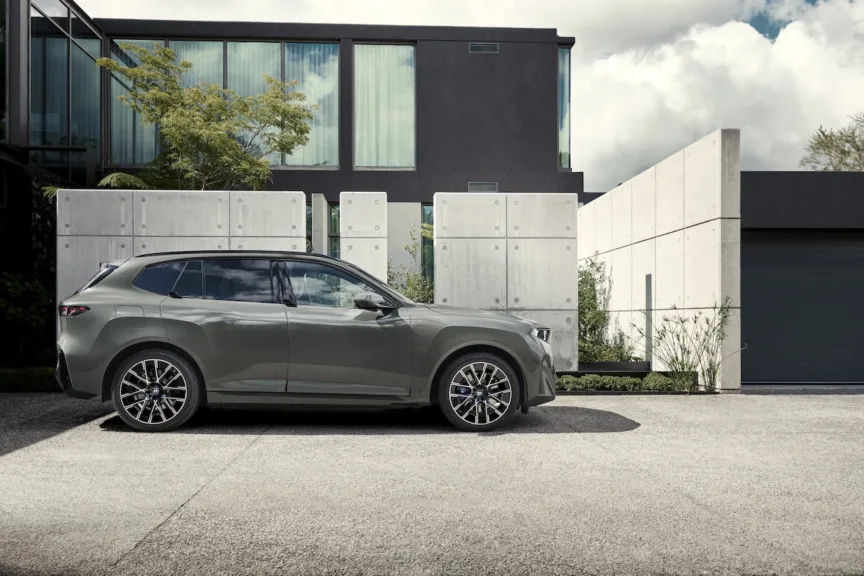
A couple of styling wins, I dig the double-X light icons, an optional lighting feature on the headlights. And I appreciate the welcome and goodbye animations built into the head- and taillights. But I go back to inquisitive about the “winglet” door handles. I appreciate the shape and the aerodynamic engineering, but it catches my eye off-guard. In the rear the X5 looks closer to traditional and quite nice.
If you want a sportier look, BMW will offer M Sport and M Sport Professional packages. You mainly get some attention-grabbing visual changes, as well as larger brakes. If you go M Sport Professional, you get 22-in wheels, instead of the standard 21s. BMW will mount as large as 23-in wheels on the X5.
MILD HYBRID POWERTRAIN
Out of the gate, BMW will offer three different propulsion systems (mild hybrid, plug-in hybrid, EV) and two different drivetrains (RWD, AWD). With the mild hybrids, BMW will sell a rear-wheel-drive version called X5 40. It gets the base, turbocharged 3.0-liter inline-six engine, coupled to an eight-speed automatic transmission, before sending power on to the rear axle. This base motor delivers 394 horsepower and 428 lb.-ft of torque, an increase of 19 horsepower and 45 lb.-ft over the outgoing X5. Nice.
Housed within the transmission lies an electric motor that BMW calls a starter-generator. It assists the inline-six at low engine revs to more efficiently get it moving, offering 17 horsepower and 148 lb.-ft of torque to do so. That same motor, part of a 48-volt system, also provides quick and smooth restarts for the start/stop system.
All told, BMW claims 0-60 mph times in 5.1 seconds and a top speed of 155 mph. Based on the stout power figures, that is almost certainly a governed top speed. The X5 40 xDrive, uses the same engine and transmission, but then sends power to all four wheels. Likely delivering similar, but slightly slower acceleration performance. I estimate by 0.2 tenths.
PHEVs
Next up the alpha numeric ladder is the X5 50e xDrive. Similar to the last generation version. It continues to produce a combined system output of 483 horsepower and 516 lb.-ft of torque from a detuned 3.0-liter inline-six offering 308 horsepower and electric motor contributing 194. As a result, 0-60 mph still takes 4.6 seconds. The top speed holds steady at 155 mph, or 87 mph if in EV mode. And that channels through an eight-speed automatic like before and like the others.
What’s new is EV driving range, now estimated at 44 miles. BMW upped battery capacity from 19.2 kWh to 26.5 kWh from a lithium-ion pack.
I quite liked the outgoing x5 50e xDrive, when I reviewed a couple of years ago. I see no reason why that would change. To see what I mean, feel free to watch my video review below.
GO EV
Based on what BMW calls its sixth-generation BMW “edrive” technology, the iX5 60 xDrive lays down 570 horsepower and 593 lb.-ft of torque via two electric motors, one mounted on each axle. The rear motor provides the larger share: 325 horsepower and 369 lb.-ft of torque. The front motor fills out the numbers with 245 horsepower and 225 lb.-ft. Strong. And enough to propel this family sized EV to 60 mph from rest in just 4.4 seconds and carry-on to up to 130 mph.
But we’ve seen those figures from EVs more and more. Much more impressive to me, an estimated 435 miles of range on a single charge. BMW credits a new, 800-volt system that makes use of brand-new battery cells that have 20 percent more energy density than before. The pack will store as much as 144 kWh’s worth of usable energy. Massive!
Moreover, BMW says the system will accept up to 460 kWs of recharging power. If provided, expect an additional 170 miles of range added in 10 minutes time. Or reach 80 percent state of charge in 22 minutes if you start with 10 percent. At home, the iX5 can accept up to 15.4 kW courtesy of the built-in charge system on a level two charger.
By the way, it’s also a bi-directional setup, if you want the iX5 to power something else for a while.
We are truly reaching full-tank-of-gas range figures with modern EVs and the starting price of them continue to come down as well. Range anxiety still exists, but with more cars like this arriving, it’s fleeting.
TECH FORWARD CHASSIS
BMW starts with a good foundational suspension geometry in the new X5. You get a double wishbone front suspension and multilink rear suspension, independent at all four wheels, of course. From there, BMW loads up the chassis with tech. To start, some variants will offer an air suspension, to replace the steel springs. BMW also offers rear-axle steering, which on a larger SUV comes in handy to handle tight parking lots.
Go even further on the X5 50e and iX5 60. BMW will add a system called Adaptive Chassis Control Professional. It’s a 48-volt system that stiffens or completely de-couples the anti-roll bars. In corners, it automatically increases the effectiveness of the anti-roll bars to mitigate body roll.
When going straight, the anti-roll bars disconnect one side from the other and allows uninterrupted articulation of each suspension corner to easily absorb all road imperfections without transferring any force to the other side. In theory, this smooths out the ride. A test drive is required to feel it in practice.
Speaking of straight-line driving, BMW will sell an optional Highway Assistant, which offers sustained hands-free driving on certain highways, similar to GM’s Super Cruise. That’s in addition to plenty of standard driving aids, named BMW Symbiotic Drive.
INSIDE
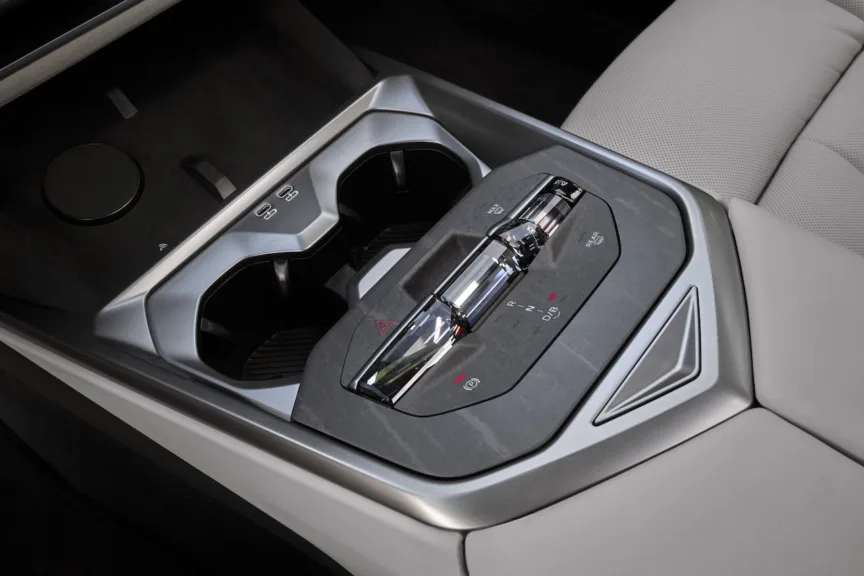
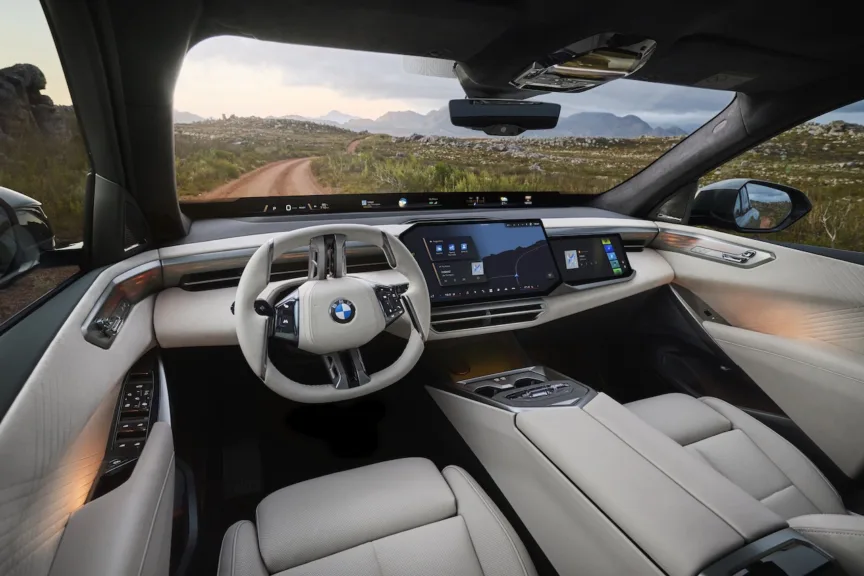
Stepping inside, BMW starts the experience with standard soft-close doors. As long as you reach the first latch, electric motors take care of the rest. BMW also offers fully automatic doors as an option, pulling parts from Rolls-Royce, perhaps. Once settled in the seat, the X5 continues to bathe you in light. What BMW describes for the X5 seems very similar to what I saw in the BMW 550e.
From there, things get predictable: more and larger screens. We get a standard head-up display, that somewhat takes place of an instrument cluster and a massive, 17.9-in center display. The latter handles wireless Apple CarPlay and Android Auto connectivity. It also offers a “hey BMW” voice assistant, but with Alexa AI tech behind it to offer more functionality. Pay a bit more and BMW will add a 14.6-in passenger screen, lovely.
Getting back to old-school luxury, front heated seats come standard, with ventilation and massaging features optional. And BMW uses a 2.4-in longer wheelbase to grant more legroom for passengers in both rows. Temperature wise, they stay comfortable courtesy of a standard 2.5-zone climate control system, a full four-zone system is offered as an option.
CONCLUSION
All the above comes from Spartanburg, South Carolina, as BMW invested 1.7 billion dollars on the facility and named it “Home of X.” To bring an X5 to your home, plan to spend at least $71,250 for the rear-wheel-drive X5 40, that figure includes the $1450 destination charge. Adding xDrive to the X5 40 raises the price to $73,550. The PHEV 50e xDrive jumps to $78,950. Going full EV starts at $81,250. All the aforementioned prices include destination.
That’s what’s available now. BMW plans to offer two more powertrains on the X5 soon, a V-8 X5 M and a hydrogen powered iX5. No prices or specific availability dates offered for either yet, but I will keep an eye out and share as soon as I learn.
In an automotive world highly resistant to change, BMW continues to make them and at an aggressive clip. Respect. I’m quite curious to learn more about the iX5 and get behind the wheel. On paper at least, it offers full-tank-of-gas range and a lot of power to play with. But I suspect we’ll still mostly see the mild-hybrids leave dealer lots. Time will tell.