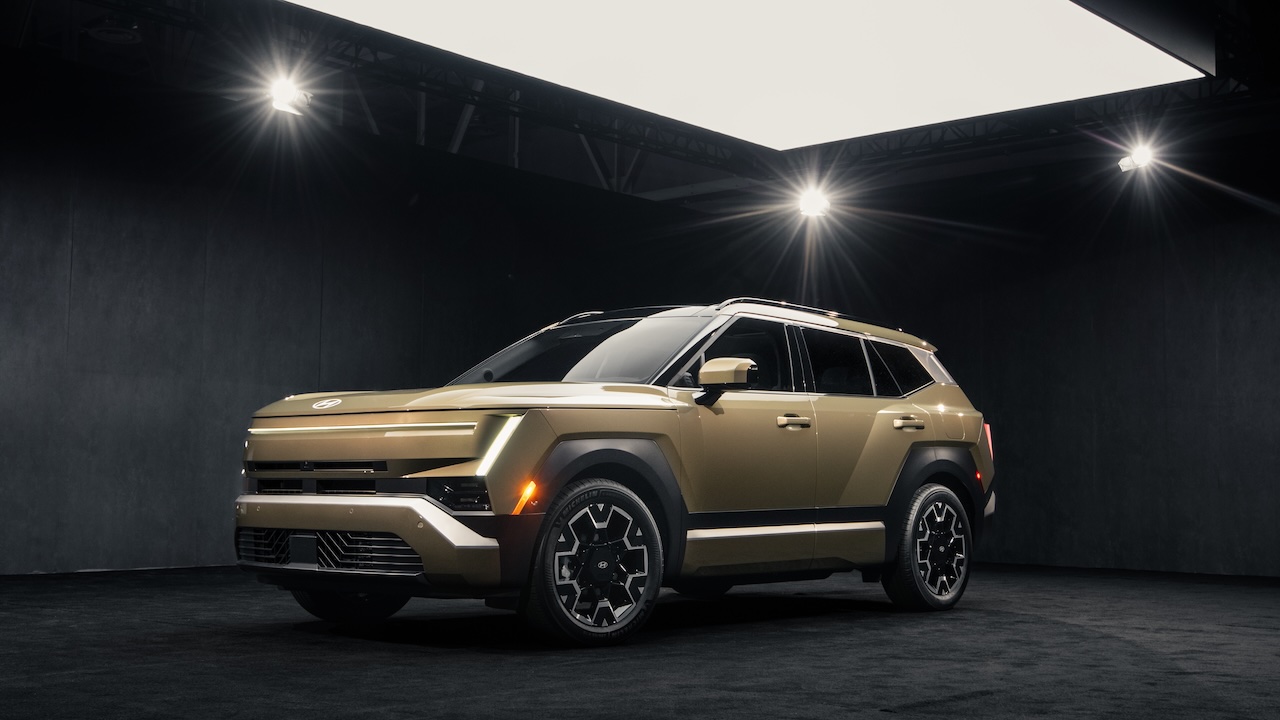
The 2027 Hyundai Tucson arrives next year with ICE and hybrid power options, FWD or AWD. Bigger in every dimension, there’s also an off-road variant on the way
Hitting U.S. shores early next year, the 2027 Hyundai Tucson arrives taller, wider, and longer than before. Hyundai also crammed in tons of new tech, as well as space to cram in tons of your own stuff. The Hybrid variant will deliver up to 42 mpg, Hyundai estimates. And it will tow up to 3000 lbs. Oh, and a new XRT Pro version joins the lineup. In other words, the new Tucson offers a vast and diverse set of skills for compact crossover SUV shoppers.
NEW LOOK
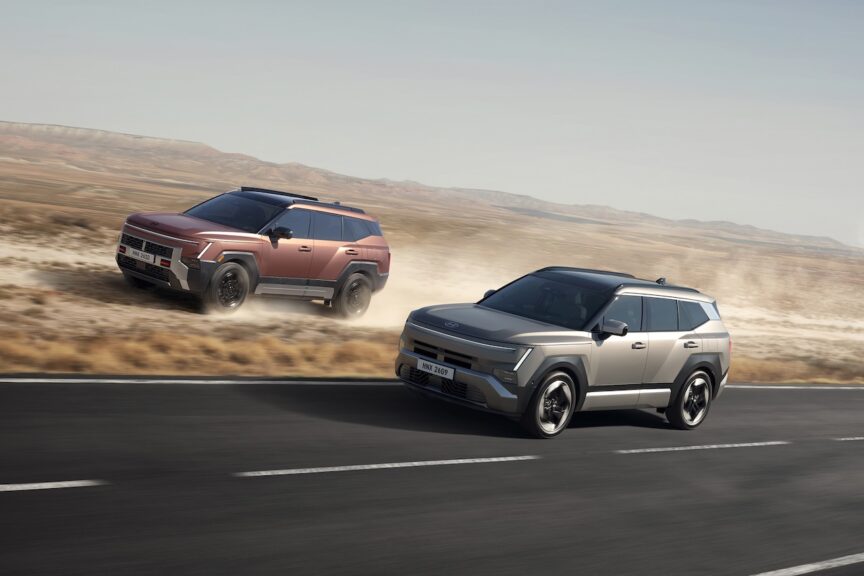
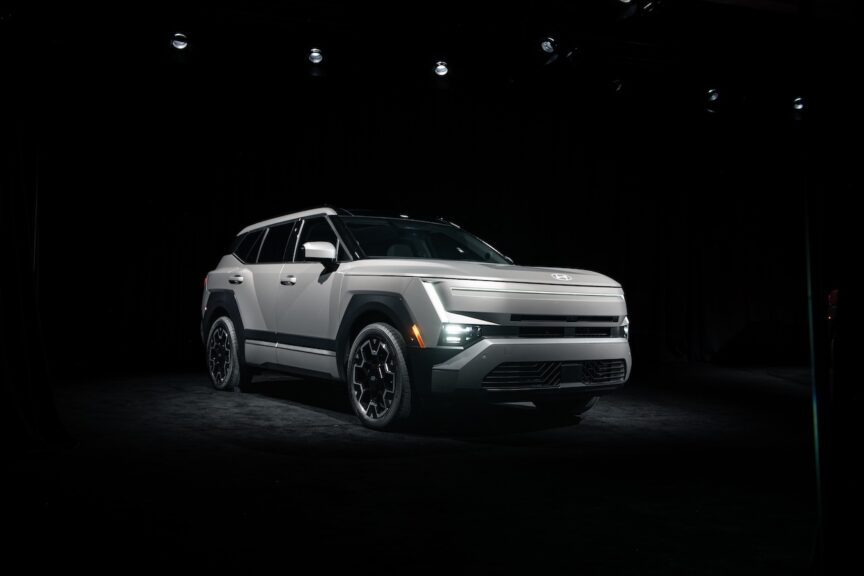
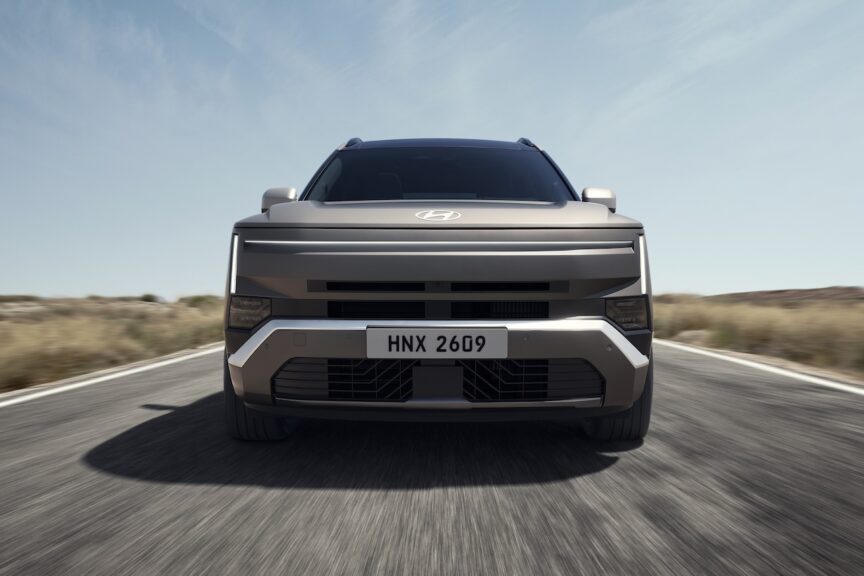
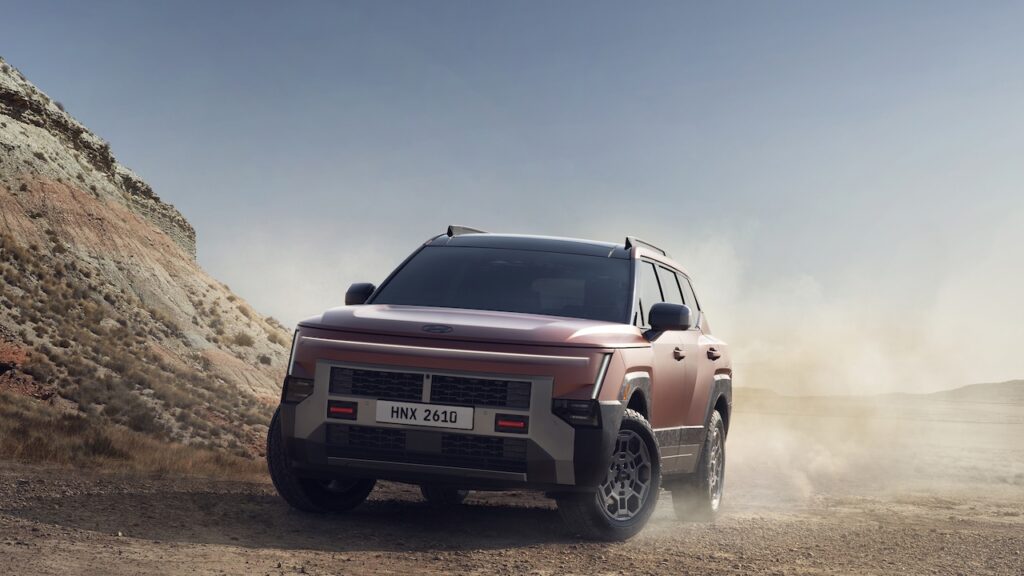
Drifting away from rounded corners and soft edges, the new Tucson goes in the direction of the new for 2024 Hyundai Santa Fe, with strong fender flares, squared edges, and pronounced fender flares. You also see cues from brother Kia with strong vertical daytime running lights on either side of the front fascia. Distinct from Kia, Hyundai also installs a long horizontal light bar, forming “H-edge” lighting. Furthermore, the actual headlights reside low, mounted horizontally.
We see a blending of EV looks come into the Tucson as well, the grille looks minimal, with a couple of horizontal slots just above the front bumper and a bit more openings built within it.
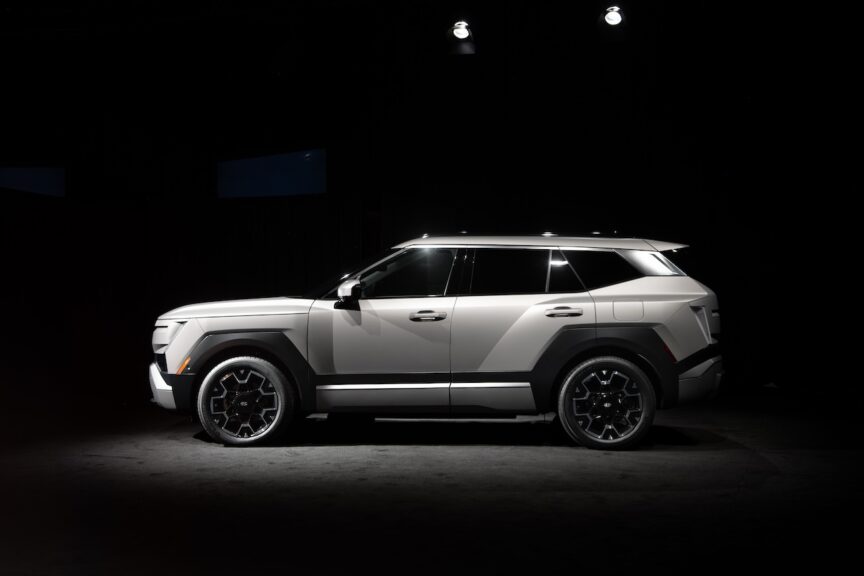
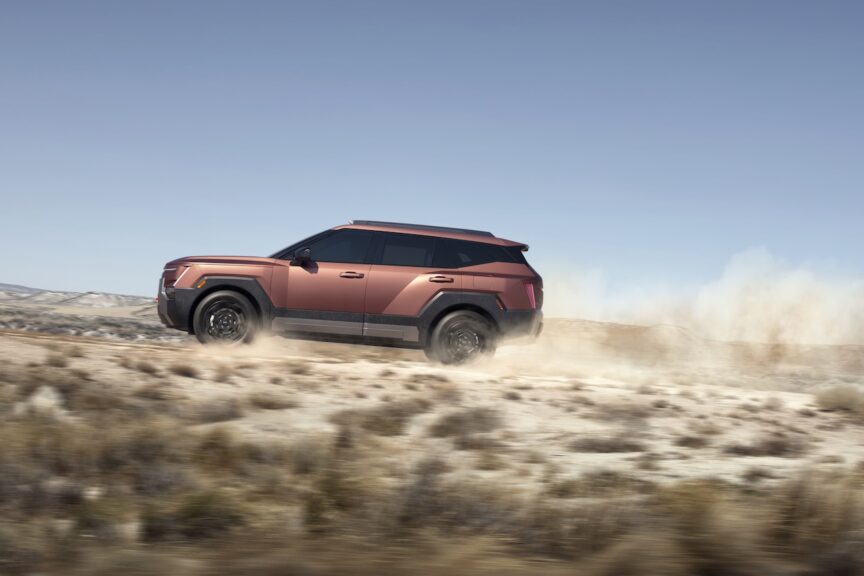
In profile, traditional looking door handles standout, as do substantial front and rear fender flares. At the top, Hyundai incorporated a subtle floating roof look. That’s capped off with aggressive cladding down low, which help highlight the up to 20-in wheels.
In back, you get more of a classic compact crossover shape. That includes similar looking lights as the front, though with separated vertical and horizontal assemblies. Not to mention a different name: Prism. Speaking of names, Hyundai calls this design language “Art of Steel.”
Overall, the Tucson looks sharp and bold. It definitely follows the styling trend of our times. It’s also grown. It now measures 185.0 inches nose to tall, 2.4-in longer than before; it’s also 75.0 inches wide, an increase of 1.6-in. The Tucson is also taller and with a larger wheelbase, making it among the largest offerings in class.
NEW TECH INSIDE
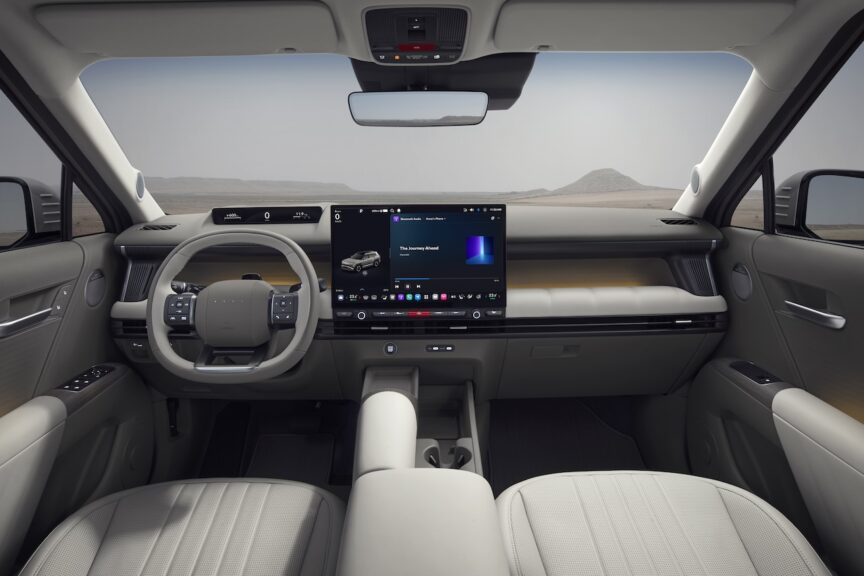
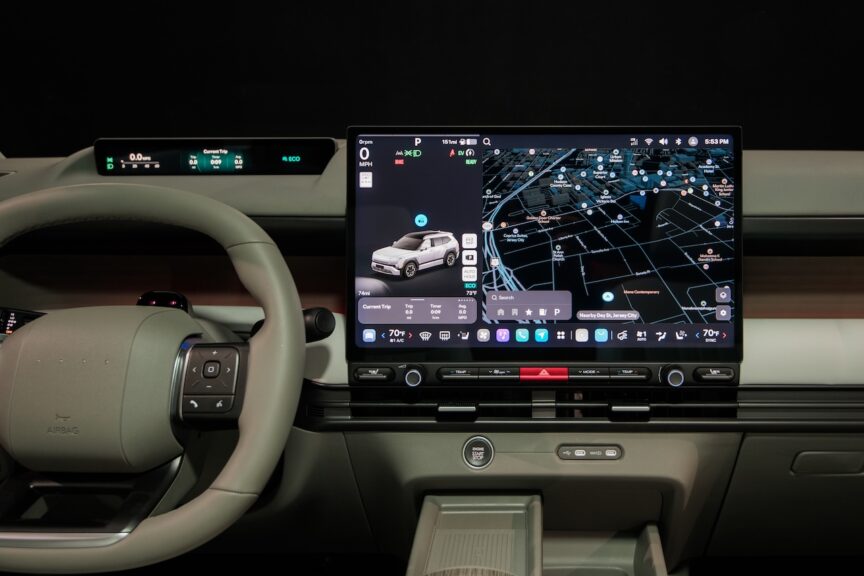
No new vehicle these days escapes the tidal wave of ever advancing digital technology. Of course, the Tucson is no exception. Starting with screens, Hyundai went bold, actually shrinking the instrument cluster screen to a slim 9.9-inch bar of information. It looks clean and resides entirely above the top of the steering wheel, but beneath the base of the windshield. Similar to what Toyota did with the C-HR but taken a step farther.
From there, Hyundai offers two sizes of center display, large and larger. The base 12.9-in screen seems like plenty of real estate to handle all information and entertainment you’d want in your compact crossover. But Hyundai offers to install a 17-in screen on some Tucson trims, giving ample space for all things.
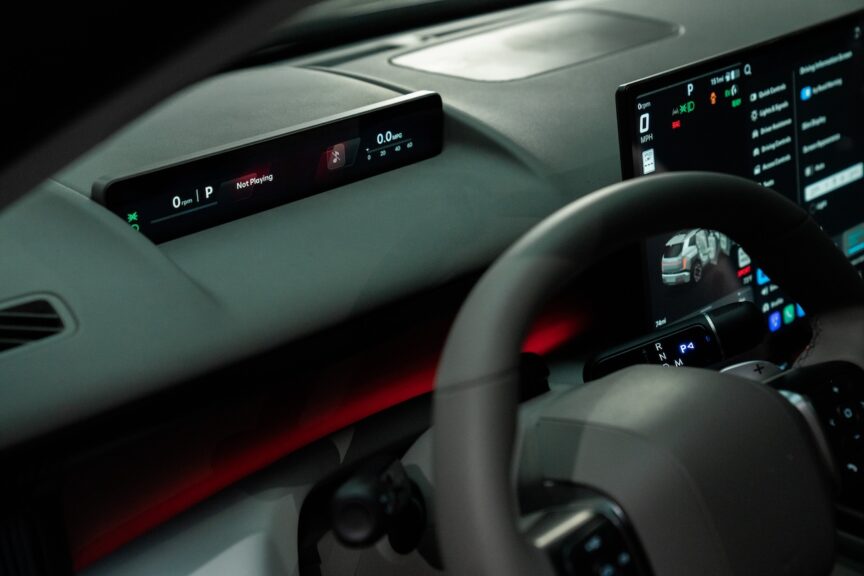
Operating it all, Hyundai used an Android Automotive OS base architecture with a new system called Pleos connect to run everything swiftly and smoothly. That includes a voice assistant called Gleo AI, which will better understand natural conversation and user context to help with multiple tasks. It all sounds enticing, but the proof comes in operation. We’ll have to wait for a test drive for that.
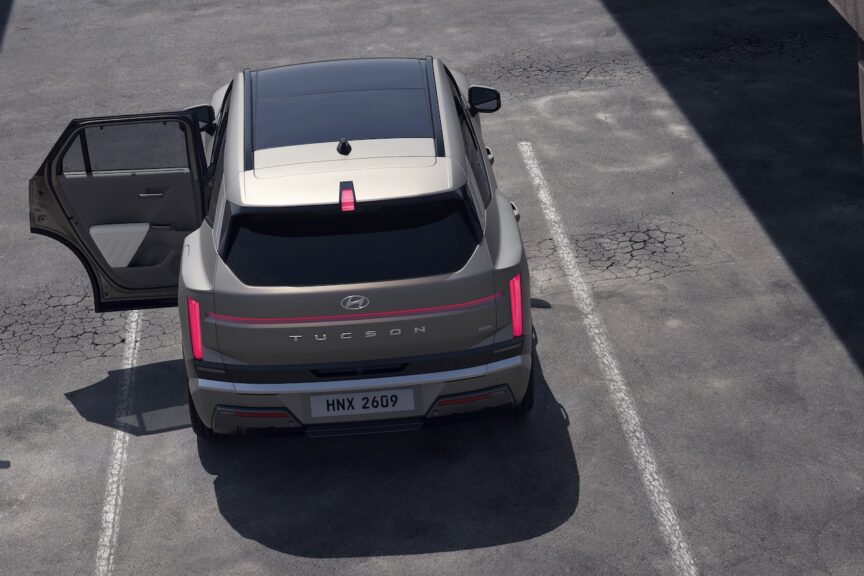
But this larger vehicle also means a larger interior with more space for folks and things. Hyundai claims nearly 42 cubic feet of cargo space behind the second row. Furthermore, the doors to the cabin now open a wide 83 degrees for super simple ingress and egress.
POWERPLANTS
Here in the U.S., Hyundai will offer two engine options on the new Tucson, a turbocharged 1.6-liter inline-four-cylinder, and a new generation hybrid. It uses a different transmission with two electric motors built in and, of course, a battery pack to help with motivation.
The turbo 1.6-liter makes do with 187 horsepower (190 PS) and 195 lb.-ft of torque, competitive with the other non-hybrid compact crossovers. It mates to an eight-speed automatic transmission and then sends power to either the front- or all-four-wheels (FWD or AWD). Hyundai estimates that will result in 28 mpg combined for FWD models, 26 mpg for AWD.
GO HYBRID
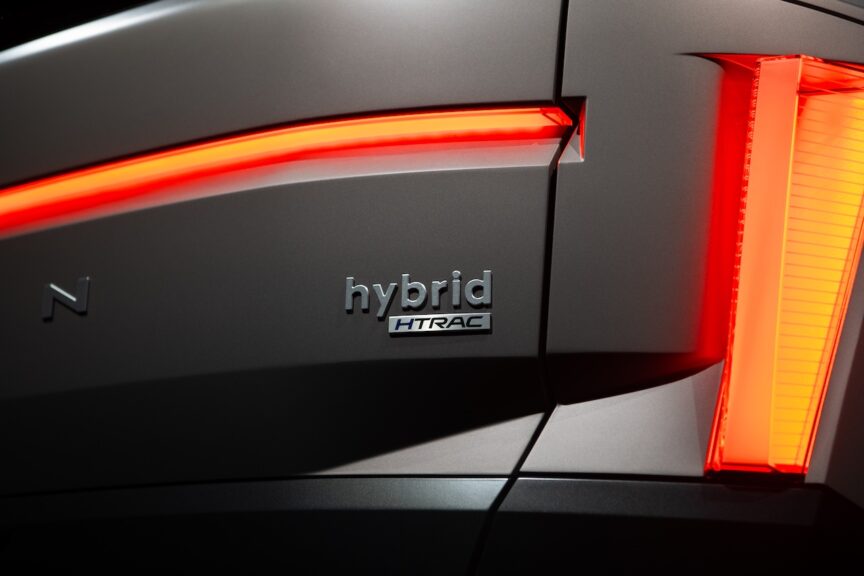
Going hybrid, which I suspect will make the majority of offerings, ups power considerably. First, Hyundai swaps in a six-speed automatic transmission with two electric motors encased in it. Those motors consume electricity from a 1.49 kWh battery pack. The smaller, motor, or P1 generates 17 horsepower, but the larger motor, P2, outputs a solid 64 horsepower and can propel the Tucson around with the engine off.
Altogether, you get as much as 242 horsepower and 280 lb.-ft of torque. Just like the ICE version, Hyundai will build front- and all-wheel-drive versions, with the FWD version on the smaller, 17-in wheel eking out an estimated 42 mpg combined.
Even better, Hyundai claims that powertrain will tow up to 3000 lbs., which beats the outgoing version by 1000 lbs. and opens up options of what you can hitch up. Additionally, you can put the vehicle in “Stay Mode,” doing so relies on the battery pack to operate the center display and HVAC for extended periods of time with the engine off. Similar to the new Palisade Hybrid.
Worldwide, Hyundai will also offer a plug-in hybrid version with even more power, 284 HP (288 PS); a bit less torque, 258 lb.-ft.; and an estimated 50 miles on EV driving range. But not in the U.S. as I understand it, at least not to start.
DRIVING AIDS BONANZA
Wanting to emphasize its towing credibility, one of Hyundai’s new driving aids is called Trailer Reverse Assist (TRA). It’s meant to help drives avoid embarrassment when backing up a trailer. There’s also Memory Reversing Assist (MRA), which records driving up to 19 mph and automatically helps with steering while reversing down narrow roads. And Ground View Monitor (GVM), which shows you what’s underneath the vehicle.
There’s also a new off-road friendly aid called Smart Terrain Assist (STA), which shows upcoming terrain on a screen with green, orange, and red “stuck scores” and recommends safe routes. Furthermore, Automatic Terrain Detection (Auto/Snow/Mud/Sand/Rock) offers intelligent mode switching to “remove the guesswork” from off-road driving. And Target Speed Control (TSC) complements STA and functions like an off-road cruise control at speeds between 1-16 mph (2-25 km/h).
TUCSON XRT PRO
But why offer off-road friendly stuff on a Tucson? Because Hyundai will now sell a XRT Pro trim. Taking cues from the Palisade XRT Pro, the Tucson XRT Pro gets standard AWD, All-terrain tires, more ground clearance, improved approach and departure angles, and front recovery hooks. It also gets a different, more off-roady look.
For folks that only want the look, Hyundai will also sell a non-Pro XRT trim. By the way, XRT stands for Xtreme Rugged Terrain.
CONCLUSION
The new Tucson shows how much momentum Hyundai has in the U.S. these days. You see bold decisions in the Tucson and high confidence too. Not to mention adding a true off-road version into the fold. And a new generation hybrid brings higher levels of efficiency and capability than before.
The execution of these bold choices remains to be seen. But Hyundai designed a strong look in the new Tucson, it’s already a styling win. And that’s about as good of a start you can hope for in a new generation model. I cannot wait for the chance to drive it.